

close
Choose Your Site
Global
Social Media
Views: 0 Author: Site Editor Publish Time: 2026-05-16 Origin: Site


Managing thermal dynamics in commercial facilities presents a constant engineering challenge. Unchecked moisture and heat transfer can quickly compromise complex mechanical networks. In commercial HVAC, refrigeration, and industrial plumbing, moisture ingress and thermal bridging frequently lead to sudden system failure. These issues also cause skyrocketing energy costs and severe structural damage. When inferior materials degrade, condensation ruins ceilings and accelerates mold growth. Engineers need reliable, long-lasting barriers to protect their mechanical investments.
This guide provides a clear, evidence-based breakdown of where elastomeric Rubber Foam Insulation is used. You will discover how it directly compares to standard plastics in performance and durability. We will also explore the practical cost-to-benefit realities of specifying this resilient material for your upcoming commercial projects. By understanding these technical specifics, you can easily justify choosing elastomeric rubber over cheaper alternatives.
Core Applications: Primarily utilized in HVAC, refrigeration, and plumbing for its superior condensation control and thermal efficiency.
Performance Metrics: Delivers a stable K-value (0.033–0.038 W/m·K) and an R-value of 3.6 to 4.2 per inch.
Structural Advantage: Features a closed-cell structure that acts as a built-in vapor retarder, eliminating the need for external moisture barriers.
ROI Reality Check: Upfront material costs are generally 25% higher than alternatives, but a properly installed system boasts a 50+ year lifespan.
Mechanical engineers constantly specify closed-cell elastomeric rubber for high-stakes environments. They rely on its inherent resistance to moisture vapor transmission. You will commonly see contractors deploying these materials across three primary commercial sectors. Understanding these applications helps you match the right material to your specific facility requirements.
Contractors frequently use this material to insulate chilled water lines. They also apply it extensively across complex refrigerant piping networks. In commercial buildings, chilled water lines operate well below ambient room temperatures. This severe temperature delta creates a powerful moisture drive.
Mechanism: The closed-cell structure prevents warm, humid air from reaching sub-ambient pipes. This physical barrier completely halts surface condensation.
Practical Benefit: By stopping condensation, it prevents costly water damage to ceiling tiles below. It also stops hidden indoor mold growth. Supermarkets and hospitals rely heavily on this mechanism. They cannot tolerate airborne mold spores or dripping water near sensitive equipment.
Facility managers apply elastomeric rubber to both hot and cold water plumbing networks. Plumbers wrap extensive domestic water lines inside high-rise buildings and industrial plants.
Mechanism: It prevents winter freezing in exposed environments. It also limits heat loss in domestic hot water lines running through unconditioned spaces.
Practical Benefit: This stabilizing effect keeps delivery temperatures consistent across massive buildings. It reduces the wait time for hot water at distant faucets. Consequently, it lowers the overall energy required by central water heaters.
Engineers utilize dense rubber cellular sheets inside heavy ductwork. They also line heavy machinery enclosures and generator rooms.
Mechanism: The dense cellular matrix absorbs low-frequency operational noise. Furthermore, it effectively dampens structural vibrations emanating from industrial compressors.
Practical Benefit: In specific configurations, it reduces noise transmission by up to 75%. You will often find it lining air handling units (AHUs). It keeps roaring fan noises from traveling down air ducts into quiet office spaces.
Manufacturers produce elastomeric rubber in several distinct physical formats. You must match the correct format to your specific project needs. Choosing the wrong profile often leads to difficult installations. It also creates compromised thermal barriers and visual defects.
Contractors prefer tubular formats for continuous, long pipe runs. They work exceptionally well for variable refrigerant flow (VRF) systems. They also protect extensive residential plumbing networks.
Best for: Standard pipe runs, VRF/VRV systems, and basic plumbing.
Best Practices: Unslit tubes easily slide over new piping. Installers do this before making final brazed connections. For existing retrofits, pre-slit tubes save massive amounts of field labor.
Implementation Note: You must execute precise joint sealing. Installers should always use manufacturer-approved contact adhesives. This critical step prevents insidious vapor leaks at the longitudinal seams. Failing to seal seams correctly renders the entire system useless.
When you insulate large-diameter pipes, standard tubes no longer fit. Installers switch to flexible sheets or wide rolls. These flat formats work perfectly for massive industrial components.
Best for: Large-diameter pipes, industrial chillers, bulk storage tanks, and rectangular air ducts.
Selection Criteria: Specifying a rubber foam insulation board over traditional fiberglass wrap offers distinct advantages. It prevents dangerous fiber shedding into airstreams. This keeps indoor air quality pristine. Hospitals frequently mandate rubber sheet lining for this exact reason.
Variations: Many sheets come with pressure-sensitive adhesive (PSA) backings. Factory-applied PSA reduces installation time on flat metal surfaces significantly. Workers simply peel the release liner and press the material firmly onto the duct.
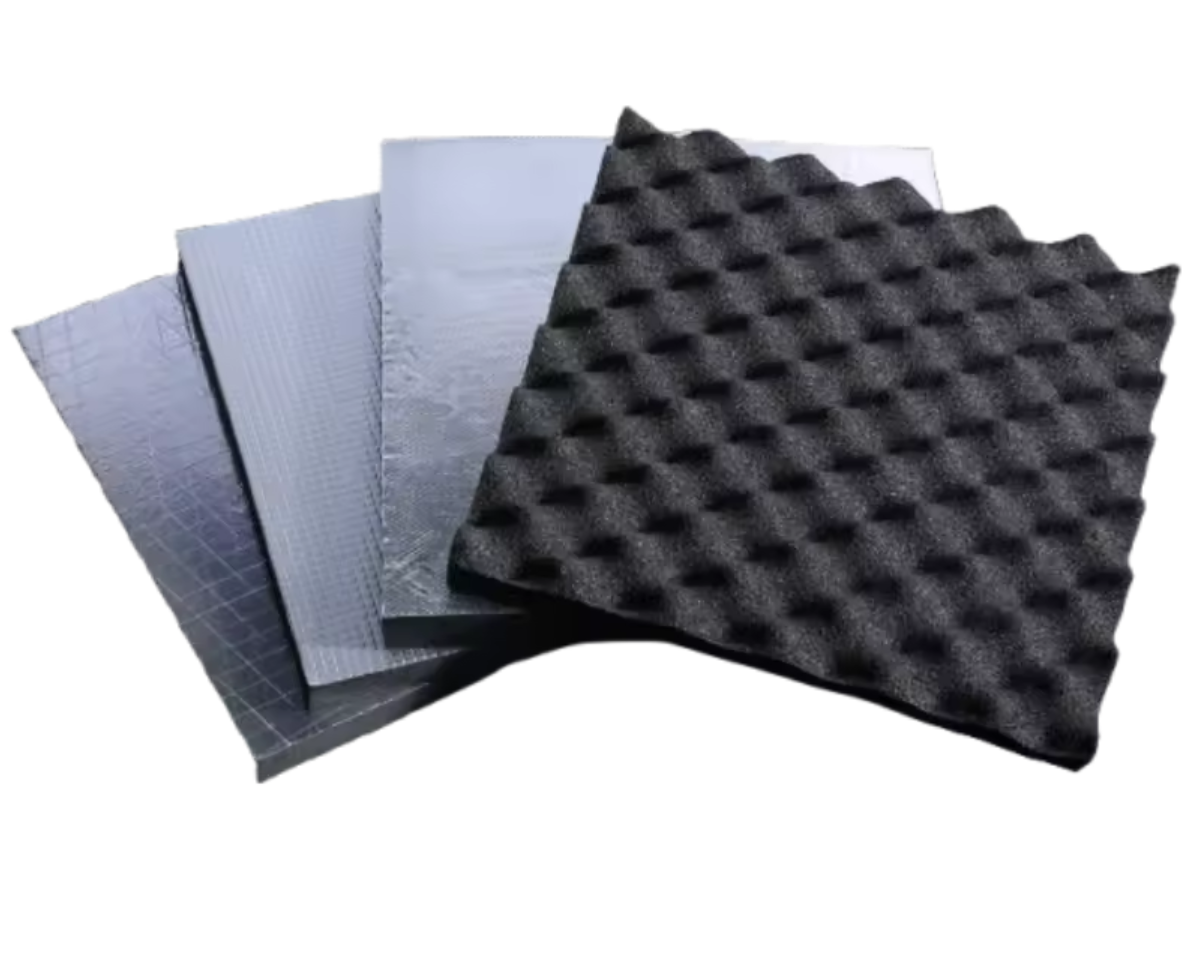
Comparing elastomeric rubber to standard plastics reveals stark performance differences. You must understand these technical disparities before finalizing building specifications. Substituting materials blindly often causes catastrophic system failures.
The chemical makeup of the material dictates its operational limits. Let us look at the two dominant choices in the commercial market.
Standard Foam Plastic (Polyethylene/PE): Polyethylene represents a cheaper, lighter alternative. Manufacturers typically rate PE up to 200°F. However, PE remains prone to rapid UV degradation. It also absorbs moisture over time if workers accidentally puncture the outer skin.
Elastomeric Rubber (NBR/PVC & EPDM): Rubber formulations deliver exceptional flexibility. EPDM versions are non-polar and highly hydrophobic. They operate continuously in extreme temperature bands. You can safely deploy them from -50°C to +105°C. This makes them ideal for dual-temperature systems.
Moisture absolutely destroys thermal resistance. Unlike open-cell foam insulation or fibrous glass, closed-cell rubber acts as its own vapor barrier. It does not lose its insulating R-value when exposed to high-humidity environments. Water vapor simply cannot penetrate the microscopic closed-cell matrix. You never need to wrap it in a secondary vapor retarder jacket.
Commercial building plenums demand rigorous fire safety standards. Inspectors will reject non-compliant materials instantly.
High-grade rubber formulations easily pass ASTM E84 testing. They achieve a 25/50 flame spread and smoke developed index. Crucially, they burn without melting or dripping hazardous flaming droplets. Polyethylene foams often melt rapidly under high heat, spreading fire to lower floors.
Technical Metric | Elastomeric Rubber Foam | Standard Polyethylene (PE) Foam |
|---|---|---|
Cellular Structure | 100% Closed-Cell | Mostly Closed-Cell |
Max Operating Temperature | Up to +105°C (220°F) | Up to +93°C (200°F) |
Built-in Vapor Barrier | Yes (Highly resistant to moisture) | Moderate (Degrades if punctured) |
Fire Behavior (ASTM E84) | Self-extinguishing, no flaming drips | Can melt and drip under sustained fire |
Flexibility at Low Temps | Excellent (Does not crack easily) | Poor (Becomes rigid and brittle) |
Purchasing decisions often come down to strict budget constraints. However, evaluating mechanical materials purely on initial price tags invites disaster. You must weigh the upfront capital against the long-term lifecycle value.
We often see contractors hesitate at the initial price of premium rubber products. A broader financial perspective usually changes their minds.
Cost Base: Initial material procurement costs generally run higher. Elastomeric materials cost roughly 25% more than fiberglass or standard PE foam.
ROI: The long-term return on investment easily justifies the premium. Rubber mitigates up to 30% of mechanical energy loss. A properly installed system boasts a verifiable lifespan of 50+ years. This extraordinary longevity makes it a highly economical choice for long-term real estate portfolios. You avoid the massive labor costs associated with replacing soggy fiberglass every decade.
Even the best materials fail if installed incorrectly. The material's maximum thermal performance depends heavily on contractor skill. Novice installers can quickly ruin high-quality materials.
Skill Dependency: Working with elastomeric rubber requires specific cutting techniques and patience. Installers must allow adhesives to become tacky before pressing seams together.
Failure Points: Improperly glued seams introduce rapid vapor leaks. Over-stretching the rubber during installation thins the cell walls. This stretching physically reduces the R-value. Uninsulated pipe supports create massive thermal bridges. These simple errors lead to localized condensation, dripping water, and severe efficiency drops.
Common Mistakes to Avoid: In our experience, rushing the adhesive curing time remains the top cause of seam failure. Furthermore, installers often bend straight tubes around tight 90-degree elbows. Instead, they should cut proper miter joints. Bending strains the outer curve, thinning the insulation exactly where condensation risks are highest.
Modern construction demands strict adherence to environmental benchmarks. Specifiers must verify regulatory compliance before approving any materials for commercial sites. The insulation sector has evolved rapidly to meet these new ecological demands.
You must ensure all specified materials meet accepted industry baselines. For rubber insulation, refer to ASTM C534. This document serves as the Standard Specification for Preformed Flexible Elastomeric Cellular Thermal Insulation in Sheet and Tubular Form. It dictates the minimum acceptable physical properties.
Furthermore, verify the fire rating aligns exactly with your local commercial building codes. Many urban jurisdictions mandate a strict B1 classification for flame retardancy. Inspectors will demand paperwork proving this classification before granting occupancy permits.
Engineers prioritize indoor environmental quality now more than ever. Modern factories produce high-quality insulation foam board and tubular products cleanly. They manufacture these items entirely without ozone-depleting CFCs or HCFCs.
When aiming for green building credits, look for specific modern traits. Specify materials utilizing Low-GWP (Global Warming Potential) blowing agents. Require verified zero-VOC (Volatile Organic Compound) emissions certifications. These exact attributes directly qualify your projects for valuable LEED and BREEAM indoor environmental quality credits. They also protect the respiratory health of the building's final occupants.
Rubber foam insulation is never a generic budget commodity. It serves as a highly engineered barrier system. Facilities utilize it extensively in moisture-heavy, high-stakes environments where condensation control remains absolutely non-negotiable. While standard plastics might suffice for minor residential jobs, commercial mechanical systems demand the durability and vapor resistance of closed-cell elastomeric rubber.
Next Steps for Buyers:
Audit the specific operating temperatures of your entire mechanical system to map potential condensation zones.
Determine whether you need standard NBR/PVC for indoors or highly UV-resistant EPDM blends for exterior lines.
Request exact dimension tolerances from your shortlisted manufacturers to ensure a snug fit around pipes.
Order sample boards to physically test adhesive compatibility before executing large-scale bulk procurement.
A: Yes, but standard NBR/PVC blends require a protective UV coating or metal cladding. This external protection prevents long-term solar degradation. Alternatively, EPDM-based rubber foam offers innate UV resistance, making it superior for direct exterior applications without extra coatings.
A: Because it features a closed-cell structure, water does not permeate the core material. You can simply wipe the outer surface dry. As long as you ensure all glued seams remain fully intact, the inherent K-value remains completely unaffected by surface moisture.
A: While highly durable and long-lasting, closed-cell elastomeric rubber proves difficult to recycle chemically. However, facilities frequently repurpose off-cuts and end-of-life materials structurally. They serve excellently as secondary acoustic dampeners or heavy-duty shock-absorbing sub-layers under industrial flooring.


