

close
Choose Your Site
Global
Social Media
Views: 0 Author: Site Editor Publish Time: 2026-05-19 Origin: Site


Engineers and procurement teams constantly balance thermal efficiency, acoustic performance, and material cost. Selecting elastomeric foams for commercial projects presents unique challenges. Traditional materials often fail when exposed to harsh environmental factors.
NBR PVC foam solves many of these industrial challenges. It is a flexible, closed-cell elastomeric blend. This material combines the oil and heat resistance of Nitrile Butadiene Rubber (NBR). It also integrates the weatherability and cost-efficiency of Polyvinyl Chloride (PVC). This structural synergy creates a highly adaptable insulation product.
Our guide provides a technical, evidence-based framework for evaluating these materials. You will understand its core functional applications across various industries. We will also show you how to mitigate common procurement risks. By the end, you will confidently specify exact foam parameters for your next build.
NBR PVC foam board is a flexible, closed-cell insulation material, strictly distinct from rigid expanded PVC used in signage.
It delivers multi-functional performance: thermal insulation, acoustic dampening (NVH), vibration isolation, and marine-grade sealing.
Evaluation requires verifying critical metrics: density (typically 55–90 kg/m³), thermal shrinkage (≤8%), and compliance with fire/environmental standards (RoHS, REACH).
Sourcing quality material demands visual inspection of the structural "skin," uniform cell consistency, and assessing appropriate adhesive and lamination treatments.
Polymer blending creates materials far superior to their individual components. NBR provides exceptional flexibility. It resists oil degradation and tolerates high temperatures. These traits make it invaluable in automotive and industrial settings. However, pure NBR lacks sufficient structural rigidity and can be expensive.
Manufacturers introduce PVC to solve these limitations. PVC adds crucial structural integrity and ozone resistance. It significantly reduces overall production costs. The resulting matrix delivers a balanced, high-performance elastomeric foam. This blend handles mechanical stress without losing its flexible nature. It remains stable even in challenging chemical environments.
Procurement teams frequently mix up two very different materials. They confuse flexible elastomeric foams with rigid plastics. We must clarify this critical difference to avoid costly sourcing errors. Rigid expanded PVC foam board serves the advertising and cabinetry industries. It is hard, white, and used primarily for outdoor signage.
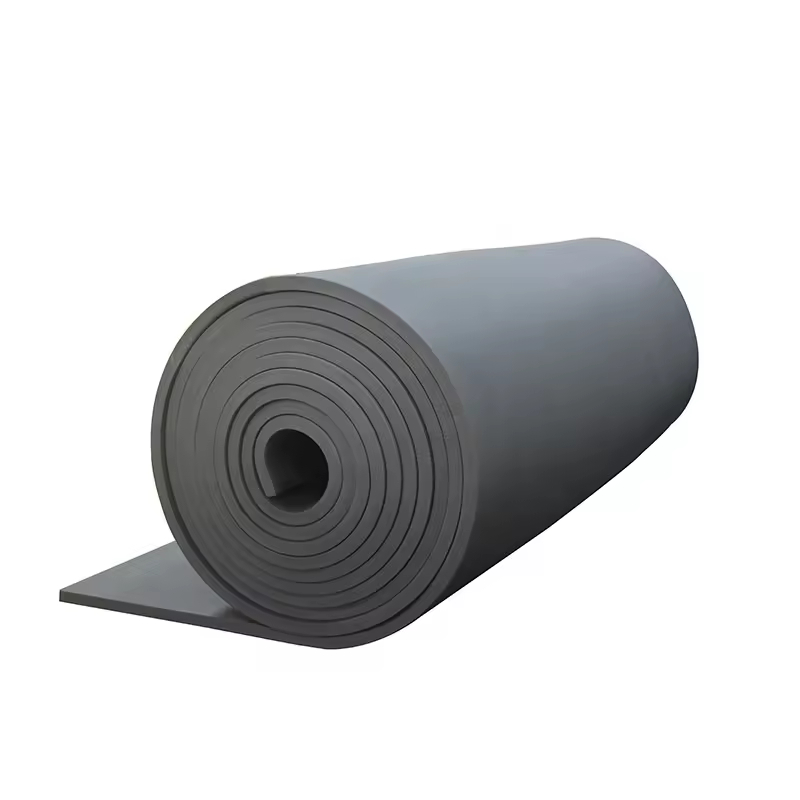
In contrast, an elastomeric NBR PVC foam board feels soft and highly flexible. It typically features a dark black or grey color. Engineers specify this material for HVAC insulation and industrial gasketing. The chart below illustrates the stark contrast between these two distinct materials.
Feature | Rigid Expanded PVC Foam | Flexible NBR PVC Foam |
|---|---|---|
Primary Texture | Hard, stiff, and rigid | Soft, spongy, and highly flexible |
Core Application | Signage, displays, cabinetry | Thermal insulation, acoustic dampening, gasketing |
Moisture Absorption | Low | Effectively zero (Closed-cell barrier) |
Common Colors | White, bright colors | Black, dark grey |
Cellular structure dictates material performance in wet environments. Open-cell foams absorb water like sponges. This ruins their thermal resistance and promotes mold growth. The elastomeric blend we are discussing utilizes a strict micro-cellular closed structure. Millions of tiny, sealed nitrogen bubbles trap air effectively.
This closed-cell configuration intrinsically blocks moisture transmission. It creates an absolute barrier against ambient humidity and liquid water. You rarely need separate vapor retarders when installing this material. The foam prevents condensation buildup on cold surfaces entirely on its own.
Evaluating material density helps you predict structural durability. Standard industry density ranges fall between 55 and 90 kg/m³. Lower density variants provide excellent lightweight insulation for static areas. Higher density variants resist physical impacts and compression loads much better. You must align the density choice directly to your mechanical requirements.
Strength minimums matter greatly for installation integrity. Material stretching during pipe wrapping requires high tensile limits. A reliable product must exhibit a tensile strength of at least 120 Kpa. Furthermore, it should offer an elongation capacity exceeding 500%. This ensures installers can stretch the foam around complex pipe joints without tearing.
Extreme temperature differentials create immediate condensation risks. This foam features incredibly low thermal conductivity. It traps stagnant air within its closed cells to block heat transfer. This prevents energy loss in commercial refrigeration systems. It also stops "sweating" on chilled architectural surfaces.
Acoustic performance presents another major engineering benefit. The dense rubber matrix absorbs structural sound waves efficiently. It dampens aggressive vibrations traveling through metal frameworks. This dual-action capability makes it an ideal Noise, Vibration, and Harshness (NVH) solution.
Commercial deployment strictly requires robust fire safety thresholds. Sourced materials must demonstrate self-extinguishing traits. Flame spread tests should show flammability metrics ≤100mm/min. Unregulated foams pose massive fire risks in enclosed building spaces.
Regulatory compliance protects both end-users and corporate liability. You should always request documentation verifying the following standards:
RoHS: Ensures no hazardous heavy metals exist in the matrix.
REACH: Validates chemical safety for European market deployment.
EN71: Confirms non-toxic safety levels, essential for consumer-facing goods.
ISO/TS16949: Meets rigorous quality control requirements for automotive part manufacturing.
Performance Metric | Standard Benchmark Target |
|---|---|
Density Range | 55 – 90 kg/m³ |
Tensile Strength | ≥ 120 Kpa |
Elongation at Break | ≥ 500% |
Thermal Shrinkage (70°C for 4 hrs) | ≤ 8% |
Flammability Rating | ≤ 100 mm/min (Self-extinguishing) |
Commercial buildings lose massive amounts of energy through uninsulated ductwork. Planners utilize NBR PVC insulation board to wrap chilled water lines and massive air ducts. The material completely halts condensation in high-humidity basement environments. It minimizes thermal drift in commercial refrigeration units. This leads to immediate energy savings and prevents costly water damage from dripping pipes.
Modern vehicles demand exceptionally quiet cabins. Automotive engineers place these elastomeric pads inside engine bays and door panels. The material dampens the harsh frequencies generated by road friction and engine vibration. Architectural designers also use it to build robust sound barriers in recording studios.
Feature note: Manufacturers often modify the surface into an "egg crate" or convoluted profile. This specific geometric design maximizes the surface area. It traps and absorbs acoustic waves far more effectively than flat panels.
Equipment enclosures require absolute protection against dust and fluid ingress. Fabricators die-cut this foam into custom gaskets and weather stripping. The material demonstrates exceptional resistance to compression set. It bounces back to its original shape even after prolonged crushing. Furthermore, the NBR component prevents chemical degradation when exposed to machine oils.
Marine environments destroy standard plastics rapidly through saltwater corrosion. This elastomeric blend boasts inherent buoyancy and zero water absorption. Saltwater and marine fuel spills do not degrade its cellular walls. These traits make it perfect for personal flotation devices (PFDs). Boat builders also utilize it as durable structural padding under boat decks.
Material format heavily influences manufacturing efficiency. Suppliers offer these products in continuous rolls or rigid cut sheets. Thickness variations accommodate vastly different engineering needs. Typical thickness ranges span from a ultra-thin 2mm up to a robust 40mm. Thin rolls feed smoothly into automated lamination machines. Thick sheets work better for heavy-duty vibration isolation pads.
Bare foam works well for internal, hidden applications. However, exposed environments demand specialized surface treatments. Lamination expands the functional lifespan of the material.
Aluminum Foil Lamination: Upgrading to a foil-faced NBR PVC foam board offers immense benefits. The foil layer reflects intense radiant heat away from the insulation. It drastically improves UV resistance for outdoor pipes. The metallic facing also enhances physical tear strength against accidental punctures.
Adhesive Backings: Manual gluing wastes expensive labor hours. Suppliers often apply high-tack acrylic or pressure-sensitive adhesives (PSA) at the factory. Installers simply peel off the release liner and stick the foam directly onto the substrate. This speeds up assembly lines significantly.
Product designers love this material due to its processing ease. The blended matrix cuts cleanly without generating harmful dust. Fabricators use heavy-duty die-cutting presses to stamp out complex gasket shapes. Slitting machines slice thick rolls into narrow sealing strips perfectly. High-speed custom routing leaves smooth edges without cellular breakdown or edge fraying.
Skeptical buyers must rely on physical inspections to vet suppliers. High-quality foam features a distinct, protective structural skin. You will find a smooth, flexible outer skin on one or both sides. This skin typically appears on thicknesses exceeding 8mm. It acts as an initial barrier against abrasions. Inspect the cut edges under bright light. You should observe a visually uniform, densely packed micro-cell structure.
Substandard manufacturing ruins elastomeric performance quickly. You must identify red flags before committing to large production runs. Request physical samples and stress-test them in your own facility. Watch out for these three critical defects:
Excessive Thermal Shrinkage: Poorly cured material shrinks drastically when heated. Place a sample in an oven at 70°C for four hours. Material shrinking beyond 8% indicates a flawed vulcanization process. This defect creates massive insulation gaps along pipe joints over time.
Inconsistent Density: Examine the core for large, uneven air pockets. These voids compromise structural integrity completely. They also ruin the stated R-values, allowing heat to leak through the weak spots.
Adhesive Failure: Low-grade PSA backings delaminate easily. Test the adhesive bond under high moisture and thermal stress. If the glue separates from the foam backing, your gaskets will eventually fail in the field.
NBR PVC foam provides a massive performance upgrade for complex engineering projects. It reliably solves thermal, acoustic, and moisture challenges simultaneously. The unique blend of Nitrile Rubber and PVC guarantees long-lasting durability in harsh industrial environments. You can easily adapt it through die-cutting, foil lamination, and adhesive backing.
To ensure successful implementation, follow these concise action steps:
Request diverse physical samples from potential suppliers for tactile evaluation.
Conduct application-specific thermal shrinkage and compression recovery tests in-house.
Demand third-party compliance certificates covering RoHS, REACH, and flammability standards.
Specify exact density ranges and adhesive requirements before committing to bulk manufacturing runs.
A: High-quality elastomeric blends operate safely between -40°C and +105°C. This wide range handles continuous-use freezing conditions in commercial refrigeration. It also withstands peak heat limits near industrial hot water pipes. Extreme temperatures beyond this range may cause accelerated structural degradation.
A: Bare elastomeric foam degrades when exposed to continuous ultraviolet light. UV rays break down the rubber matrix, causing surface cracking over time. For direct outdoor exposure, you must specify aluminum foil cladding or apply specialized UV-resistant protective coatings.
A: NBR PVC offers superior oil and chemical resistance compared to EPDM. This makes it better for automotive and heavy machinery environments. EPDM generally provides better natural UV resistance. However, NBR PVC blends often present a more cost-effective profile for large-scale indoor structural insulation.
A: Low-quality foams may emit volatile organic compounds (VOCs). You must source verified low-VOC variations for enclosed architectural spaces. Always require RoHS and REACH compliance certificates. These standards ensure the material remains non-toxic and safe for continuous indoor HVAC applications.


