

close
Choose Your Site
Global
Social Media
Views: 0 Author: Site Editor Publish Time: 2026-05-22 Origin: Site


Uncontrolled condensation and moisture intrusion are the leading causes of thermal failure. They also trigger severe Corrosion Under Insulation (CUI) in commercial building systems. How do we stop this destruction? You need a reliable, native defense mechanism. Closed cell elastomeric foam serves as the foundational standard. It successfully mitigates these risks across chilled water, refrigeration, and HVAC environments.
This article provides engineers, specifiers, and mechanical contractors with an objective, data-driven framework. We will help you evaluate and select the exact elastomeric insulation materials your project needs. You will learn how micro-structures block moisture naturally. You will discover the crucial differences between chemical formulations. We will also explore thermal metrics, safety compliance, and cold-weather installation realities. Read on to master these critical material selection strategies.
Closed cell elastomeric foams feature sealed micro-structures that act as built-in vapor retarders, eliminating the strict requirement for separate moisture jackets in many indoor applications.
The primary decision point lies in chemical composition: EPDM (hydrophobic, UV-resistant) versus traditional NBR/PVC (hydrophilic, requires UV protection).
Evaluating success requires balancing three core metrics: Thermal Conductivity (k-value), Water Vapor Permeability (WVP), and continuous service temperature ranges.
Selecting the right format—from tubular profiles to rigid **closed cell insulation board**—depends heavily on pipe diameter, spatial constraints, and NFPA compliance requirements.
Understanding cellular structure is your first step in evaluating insulation materials. The physical architecture of a material dictates how it handles heat, moisture, and airflow. Manufacturers engineer elastomeric foams specifically for environmental isolation.
You can divide cellular materials into two distinct categories. Each serves an entirely different engineering purpose.
Open-cell structure: This material functions exactly like a kitchen sponge. The cells interconnect. It compresses easily and allows rapid airflow and fluid transmission. We use open-cell foams primarily for acoustic absorption and physical cushioning. They fail completely when exposed to moisture.
Closed-cell structure: Imagine thousands of microscopic, sealed rubber balloons. The cell walls do not connect or break into one another. This rigid structure resists gas and fluid penetration. It provides high structural integrity and exceptional sealing capabilities.
Many professionals confuse "vapor barriers" with "vapor retarders." A vapor barrier provides absolute moisture blockage. You typically achieve this using thick foil or metal jackets. A vapor retarder drastically reduces permeability but does not stop it 100%. The smooth, natural outer skin of closed cell rubber insulation acts as a highly efficient vapor retarder natively. It eliminates the need for extra protective wrapping in most standard indoor scenarios.
Contractors sometimes stretch elastomeric foam over pipe elbows. Stretching the material thins the cell walls. It eventually tears the protective skin. You should always cut and glue the foam to fit angles properly. This preserves the vapor retarder skin.
How do manufacturers create this sealed micro-structure? The process resembles a complex baking recipe. They compound synthetic rubber bases with specific chemical blowing agents. They extrude this mixture into tubes or flat sheets. Next, they pass the material through long, heated ovens. The controlled heat triggers the blowing agents. The agents turn from solid to gas, expanding the rubber. This controlled expansion creates the independent, closed cellular structure we rely on for thermal isolation.
You cannot select materials based on physical feel alone. Evaluating success requires hard data. We balance three core metrics to determine if a material will survive a specific mechanical environment.
Thermal conductivity serves as the baseline metric for insulating efficiency. We call this the k-value. It measures how easily heat transfers through the material. You want the lowest number possible. A k-value of ~0.245 at 75°F represents exceptional performance. Lower k-values are critical for a simple reason. They allow you to use thinner material. Thinner insulation saves labor time. It also resolves tight-space installation conflicts inside cramped utility shafts.
Water vapor permeability is your ultimate defense mechanism against CUI. We measure WVP in perm-inches. A perm-inch calculates how much moisture passes through one inch of material under specific pressure. Elastomeric foams typically range from 0.05 down to 0.01 perm-inches. When you insulate cold chilled water lines, ambient moisture constantly tries to penetrate the foam. Low WVP ratings stop this vapor drive. They keep the metal pipe dry and corrosion-free.
You must define your operational thresholds before specifying a product. Different HVAC systems subject insulation to extreme temperature swings.
Low-end threshold: Most elastomeric foams share a deep-freeze limit of -297°F. This easily covers commercial refrigeration lines.
High-end limits: Standard foams cap out around 220°F. However, advanced systems like VRF/VRV push fluid temperatures much higher. For these, you need premium materials rated up to 257°F.
Metric | Industry Standard Target | Primary Engineering Benefit |
|---|---|---|
Thermal Conductivity (k-value) | ~0.245 @ 75°F | Minimizes material thickness; reduces spatial footprints. |
Water Vapor Permeability (WVP) | 0.05 to 0.01 perm-inch | Blocks vapor drive; prevents CUI on chilled water lines. |
Continuous Service Max Temp | 220°F to 257°F | Ensures safety and stability on high-heat VRF/VRV systems. |
The primary decision point in your specification process lies in chemical composition. The industry standardizes around two main synthetic rubbers. We have Nitrile Butadiene Rubber blended with Polyvinyl Chloride (NBR/PVC). We also have Ethylene Propylene Diene Monomer (EPDM). They look identical to the naked eye. Their chemical behaviors differ entirely.
Moisture control comes down to molecular polarity. Water molecules are highly polar. They carry small electrical charges.
NBR/PVC is a polar material. It is naturally hydrophilic. Because opposites attract, NBR/PVC actively attracts water molecules over time. If the vapor skin gets damaged, NBR/PVC will slowly absorb moisture. This leads to cellular collapse. The thermal degradation can ruin a system over decades.
EPDM is non-polar. It is naturally hydrophobic. It repels water at the molecular level. Even if the surface skin suffers cuts or abrasions, EPDM resists moisture uptake. It maintains long-term thermal stability effortlessly.
Pipe degradation risks represent a massive liability for mechanical contractors. External Stress Corrosion Cracking (ESCC) destroys expensive stainless steel piping. PVC contains halogens, specifically chlorides and bromides. When you expose NBR/PVC to heat and moisture, these halogens can leach out. They attack the stainless steel surface, causing microscopic pitting and catastrophic failure. We highlight EPDM as the safer alternative. It is natively low-halogen. It protects your infrastructure investments.
Exterior ductwork and rooftop refrigerant lines face brutal solar radiation. Ultraviolet rays destroy rubber quickly.
NBR/PVC: This material degrades under UV light. It turns powdery and cracks. Manufacturers enforce a mandatory requirement for UV-protective coatings. You must reapply these paints every few years.
EPDM: This material features natural degradation resistance. It resists ozone and UV radiation natively. EPDM rarely requires external protective coatings. It saves considerable maintenance labor over the building's lifespan.
Once you select the chemical formulation, you must choose the right physical format. Matching the form factor to the mechanical system ensures an airtight envelope. It also streamlines the installation process.
Manufacturers produce elastomeric materials in distinct profiles. You specify standard un-slit or pre-slit tubes for fluid piping. These tubes handle common diameters, offering wall thicknesses from 1/4" up to 2". Pre-slit tubes feature factory-applied adhesive strips. They allow contractors to snap the foam over existing pipes quickly.
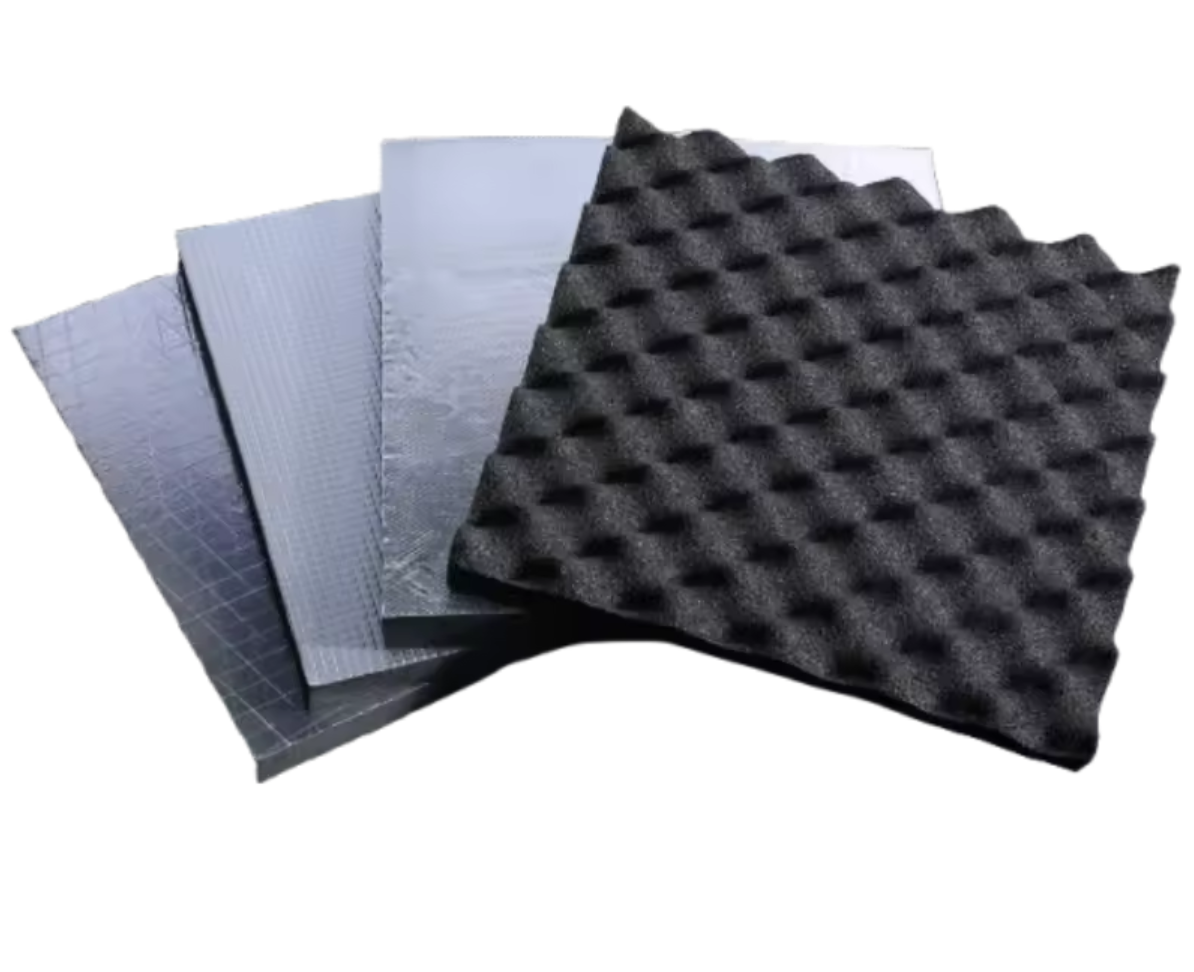
Large-scale systems require flat formats. You should recommend sheet rolls or rigid closed cell insulation board for large-diameter iron pipes. Massive chiller tanks and exterior ductwork also require flat stock. Heavy equipment housings benefit greatly from thick insulation foam board. Flat sheets contour easily around large, curved metal surfaces when secured with specialized contact adhesives.
Look for manufacturer features designed to reduce job site waste. High-quality sheet goods often feature double-sided protective skins. Construction sites are chaotic. Materials drag across rough concrete. If one side of a sheet gets scratched or damaged, contractors simply flip it over. The other side remains perfectly usable. This tiny manufacturing detail saves thousands of dollars in scrapped material.
Engineers frequently misunderstand elastomeric acoustic capabilities. We must clarify an important engineering nuance. Closed cell foam is excellent for isolating mechanical vibration. We wrap it around equipment housings to stop rattling. It prevents vibration transfer into the building structure. However, it should not be specified for room-level acoustic deadening. It reflects airborne sound waves. Open-cell foams are far superior for reducing echo inside a recording studio or conference room.
Do not use standard tubing on pipes supported by heavy hangers. The hanger will compress the foam. Compression destroys the thermal k-value and creates a cold spot. Always use rigid, high-density inserts at pipe support locations. This prevents compression and stops condensation drips.
Excellent thermal metrics mean nothing if the material fails local building codes. Specifiers must verify life safety standards. You must also account for the physical realities of the construction site environment.
Fire standards represent must-verify metrics for all specifiers. Elastomeric foams must pass stringent laboratory testing.
ASTM E84: This tests surface burning characteristics. Materials must achieve a 25/50 flame and smoke rating. This means the flame spread index remains under 25, and the smoke developed index stays under 50.
NFPA 90A/90B: These standards govern air conditioning and ventilating systems. You need "Plenum-rated" materials to run insulation inside return-air cavities. If a fire breaks out, the material cannot release toxic smoke into the breathable air supply.
Winter construction schedules pose unique challenges for rubber materials. Rubber experiences a "glass transition temperature." At a certain cold threshold, the material becomes brittle and snaps instead of bending.
Traditional NBR/PVC becomes difficult to install when temperatures drop below -4°F. It stiffens drastically. Contractors struggle to wrap it around corners. In contrast, EPDM maintains its flexibility down to an impressive -65°F. If you manage an outdoor construction project in a northern winter, EPDM is absolutely critical for maintaining installation speed.
Indoor Air Quality (IAQ) matters immensely in schools, hospitals, and commercial offices. You should advise clients to look for GREENGUARD Gold certification. This guarantees the material emits very low Volatile Organic Compounds (VOCs). NBR/PVC often requires EPA-registered chemical biocides to fight mold. Non-polar EPDM materials naturally resist mold growth. They achieve this without relying heavily on added chemical treatments. They provide a cleaner, safer breathing environment.
Controlling moisture and preventing thermal loss dictates the lifespan of modern mechanical systems. You now have an objective evaluation framework to make the right choices. You can confidently navigate the complexities of elastomeric materials.
Your shortlisting logic should follow a clear path. Calculate your required thickness based on fluid temperature, ambient humidity, and pipe size. Default to standard NBR/PVC formulations for typical interior budgets. However, you must specify EPDM for high-heat VRF systems, heavy outdoor applications, or sensitive stainless steel piping.
Your next steps are straightforward. Do not guess your material thickness. Encourage your design team to consult a manufacturer-provided thickness calculator. Request sample data sheets from suppliers. Always verify the perm-inch ratings and fire compliance codes against your specific project specifications. Proper material selection today prevents catastrophic system failures tomorrow.
A: Open-cell rubber features interconnected pockets that allow air and water to flow freely. We use it primarily for acoustic buffering and soft impact absorption. Closed cell rubber features independently sealed micro-balloons. It traps gas inside, blocking airflow and fluid transmission. We use it for rigid moisture sealing and thermal insulation.
A: Generally, no. The smooth, outer skin functions as a highly effective vapor retarder natively. It prevents moisture intrusion in most standard applications. However, extreme high-humidity environments, severe mechanical abuse, or heavy outdoor solar exposure may still require a protective metal or PVC jacket.
A: It depends on the chemical composition. NBR/PVC degrades rapidly under UV radiation and requires a mandatory, regularly maintained protective coating. EPDM is inherently UV and ozone resistant. It can withstand prolonged outdoor exposure without chemical coatings, though physical jackets are still recommended against bird or mechanical damage.


