

close
Choose Your Site
Global
Social Media
Views: 0 Author: Site Editor Publish Time: 2026-10-09 Origin: Site


Are sweating pipes causing water damage in your facility? Using the wrong insulation thickness inevitably leads to costly condensation. You will see pooling water on mechanical room floors, rusted supports, and degraded infrastructure. In this comprehensive engineering guide, we break down exactly how to select the precise thickness required to keep your systems completely dry and energy-efficient.
Thickness is Variable-Dependent: The necessary profile relies heavily on operating line temperature, ambient heat, relative humidity, and pipe diameter.
Closed-Cell Advantage: Elastomeric foam functions as a highly efficient barrier. It blocks moisture transmission natively without requiring an additional fragile protective jacket.
Chilled Water Systems: Cold HVAC networks demand much thicker profiles compared to standard plumbing. These often range from 3/4 inch to well over 2 inches, especially in humid environments.
Proper Installation is Crucial: Even mathematically flawless thickness specifications will fail if seams, joints, and termination points are left unsealed.
To select the correct insulation profile, facility managers and system designers must first understand the physical mechanics driving pipe condensation. Often referred to in the maintenance industry as pipe sweating, this phenomenon is a direct result of thermodynamics interacting with atmospheric moisture. Imagine a muggy mechanical basement during the peak of summer. The air is heavy with water vapor just waiting for a cold surface to cling to.
The ambient air in any building contains varying amounts of invisible water vapor. The dew point represents the specific temperature at which this air reaches absolute saturation. When a pipe surface temperature plunges below this critical dew point, the adjacent air cools rapidly. Because cold air inherently holds less moisture than warm air, the excess vapor undergoes a phase change. It transforms into liquid droplets directly on the bare metal surface.
Specifically, the primary function of thermal barriers in cold systems extends beyond just keeping the internal fluid chilled. The real engineering goal is keeping the outer surface temperature of the insulation strictly above the ambient dew point. By introducing a material with exceptionally low thermal conductivity between the frigid metal and the warm room, heat transfer slows down significantly. This dynamic ensures the outermost layer stays warm enough to fend off condensation.
Commercial HVAC and industrial refrigeration networks are particularly susceptible to severe sweating. These systems typically circulate fluids at temperatures hovering between 35 and 45 degrees Fahrenheit. Because these operating temperatures sit drastically lower than average indoor dew points, the thermal drive is intense. This physical force pushes ambient heat toward the cold core continuously. Without adequate chilled water pipe insulation, these lines will drip endlessly. Consequently, this triggers devastating chain reactions like corrosion under insulation, ruined ceiling tiles, and hazardous mold blooms in enclosed spaces.
Recent shifts in commercial building codes highlight a growing demand for advanced elastomeric foams. As global energy efficiency mandates become stricter, facility owners are actively moving away from traditional porous materials. Modern HVAC design increasingly favors compounds that offer both superior thermal resistance and built-in moisture defenses. Industry analysts note that preventing moisture intrusion is now prioritized just as highly as thermal retention. This shift drives a massive surge in the adoption of specialized rubber foams to meet rigorous new sustainability and indoor air quality standards.
Engineers and mechanical contractors consistently specify elastomeric blends for condensation control due to their unique physical and chemical properties. When you need a failsafe barrier, specific material engineering makes all the difference.
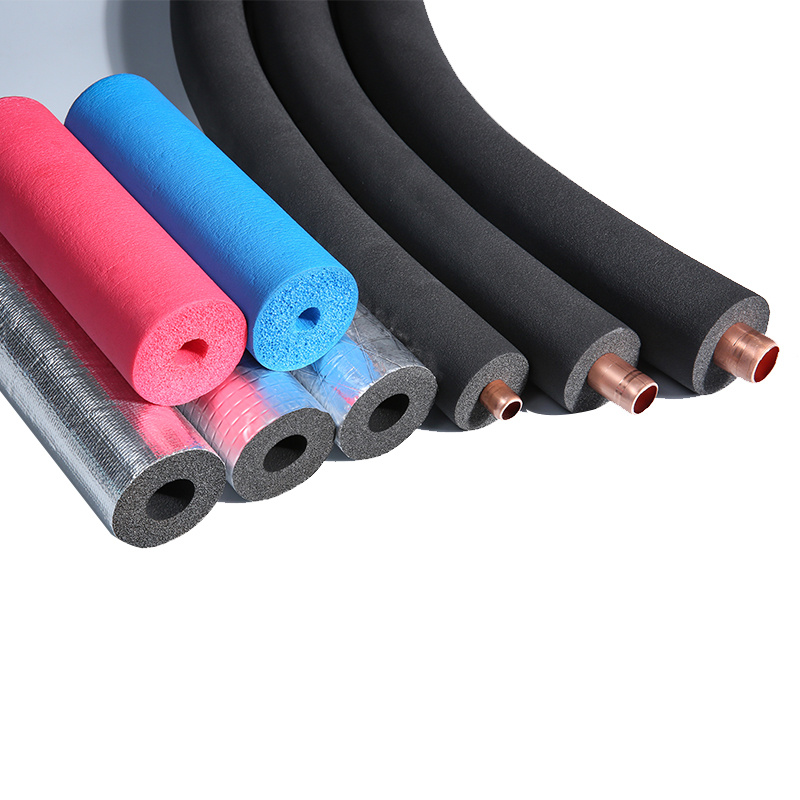
This synthetic material is created by meticulously blending Nitrile Butadiene Rubber with Polyvinyl Chloride. The nitrile component delivers exceptional flexibility, elasticity, and resistance to industrial oils. Meanwhile, the PVC addition introduces mechanical toughness, weather durability, and enhanced fire-retardant characteristics. Fused together, they form a robust, pliable matrix perfectly suited for navigating complex commercial piping layouts.
The most profound advantage of this material lies in its microscopic architecture. Unlike open-cell fibrous alternatives that allow air and moisture to freely pass through, closed cell rubber insulation consists of millions of independent, gas-filled bubbles. This unique cellular matrix creates a naturally immense resistance to water vapor transmission. It acts as its own vapor retarder, stopping moisture dead in its tracks before it can ever reach the vulnerable pipe.
Furthermore, premium elastomeric materials exhibit extremely low thermal conductivity. High-quality variants often feature a thermal conductivity as low as 0.034 W/m·K at zero degrees Celsius. This high thermal resistance effectively bottlenecks the transfer of ambient heat into the cold fluid. By maintaining a steady thermal barrier, the outer face remains above the dew point.
These specialized foams are engineered for extreme environments. They typically boast a broad operating temperature range from minus 50 degrees Celsius up to 105 degrees Celsius. In addition, mechanical rooms frequently feature chaotic layouts packed with sharp bends, bulky valves, and tight clearances. The inherent flexibility of the rubber allows installers to manipulate and stretch the foam over irregular shapes without snapping. A seamless, snug fit drastically minimizes the risk of uninsulated voids where condensation loves to hide.
Selecting the appropriate profile dimension is never a guessing game. It demands careful evaluation of specific environmental and operational variables. Relying on outdated rules of thumb often leads to catastrophic moisture failures across the entire building.
Relative humidity stands as the single most critical metric when calculating thickness for moisture control. High humidity means the atmosphere is saturated, pushing the dew point dangerously close to the actual room temperature. For instance, in a basement mechanical room sitting at 80 degrees Fahrenheit with 50 percent relative humidity, the dew point hovers around 59 degrees. However, if a summer thunderstorm pushes that humidity to 85 percent, the dew point skyrockets to 75 degrees. In such muggy environments, a dramatically thicker layer is mandatory to keep the surface temperature above that elevated threshold.
The chill of the liquid running through the system directly impacts how fast heat gets pulled from the room. The colder the internal fluid, the thicker the barrier must be. Sub-zero refrigeration lines operating at a blistering minus 20 degrees require vastly more thermal resistance than standard domestic cold water plumbing running at 55 degrees. Ultimately, the larger the temperature gap between the fluid and the ambient air, the more robust your insulation profile needs to be.
The physics of heat transfer dictate that diameter heavily influences performance. Larger pipes possess a much greater surface area, which fundamentally alters the surface heat transfer coefficient. A massive 4-inch main will generally require a completely different, often thicker, profile than a small half-inch branch line, even if both operate under the exact same temperature and humidity constraints.
While precise engineering calculations should always be executed using manufacturer software or ASHRAE standards, the following baseline guidelines provide a solid starting point based on varying environmental severities.
Domestic Cold Water: Under normal conditions, a 3/8-inch to 1/2-inch thickness usually suffices. In severe, highly humid conditions, upgrade to 3/4-inch to 1-inch. Extreme tropical environments may demand up to 1.5 inches.
Chilled Water: Normal conditions require 1/2-inch to 3/4-inch. Severe conditions demand 1-inch to 1.5 inches. For extreme environments with over 90 percent humidity, a 1.5-inch to 2-inch profile is strictly necessary.
Sub-Zero Refrigeration: Normal spaces need 3/4-inch to 1-inch. Severe environments require 1.5 to 2 inches. Extreme conditions often dictate 2 to 3 inches, which typically involves nesting multiple layers together.
When designing a mechanical system, selecting the right compound is just as vital as calculating the thickness. Facility managers frequently evaluate several rubber insulation materials to stop surface condensation. Understanding the structural disparities between them reveals exactly why specific blends dominate the commercial market.
Material Type | Cellular Structure | Moisture Resistance | Flexibility & Installation | Best Application |
|---|---|---|---|---|
NBR PVC Foam | Closed-Cell | Excellent (Built-in vapor barrier) | Highly flexible, easily fits tight valves | Chilled water, refrigeration, plumbing |
Fiberglass | Open-Cell | Poor (Relies entirely on fragile outer jacket) | Rigid, difficult on complex pipe layouts | High-heat steam and boiling water lines |
Polyethylene Foam | Closed-Cell | Moderate (Degrades over time) | Stiff, prone to splitting at elbows | Basic residential domestic water |
Fiberglass remains a traditional staple for high-heat applications like steam pipes. However, when deployed on cold systems, its structural flaws become glaringly obvious. If a maintenance worker accidentally punctures the delicate outer vapor jacket, moisture immediately invades the fiberglass. The resulting wet insulation loses all thermal resistance. NBR PVC eliminates this vulnerability entirely, as the material itself repels water throughout its entire core.
Specifying the perfect thickness is only the first step. The unforgiving laws of thermodynamics dictate that moisture will exploit any available pathway to reach a cold surface. Consequently, long-term success relies entirely on flawless execution during installation. Even a massive 2-inch thick profile will drip if applied poorly.
The most frequent point of failure in any moisture control system is the seam. When wrapping tubes around existing piping, technicians must slit the material longitudinally and glue it back together. It is absolutely imperative to use the manufacturer-approved contact adhesive on every single longitudinal seam and butt joint. The adhesive chemically welds the rubber surfaces into a unified, continuous vapor barrier. Relying lazily on electrical tape or zip ties leaves microscopic gaps. Vapor pressure will forcefully drive ambient moisture through these unsealed cracks, bypassing the insulation entirely.
Thermal resistance is directly tied to the thickness of the trapped air cells. If the foam is crushed, those microscopic bubbles collapse, the wall thins out, and the insulating value plummets. This compression typically happens at pipe hangers. If a heavy, water-filled pipe rests directly on a standard metal clevis hanger, the weight crushes the rubber at the bottom. This localized thin spot will inevitably sweat. To prevent this, installers must utilize rigid pipe support inserts that match the exact thickness of the surrounding foam.
Selecting the precise inner diameter is non-negotiable. The inner diameter of the foam must hug the outer diameter of the copper or steel perfectly. If the fit is too loose, an air pocket forms between the pipe and the foam. This trapped air holds moisture, which condenses instantly on the cold metal. Conversely, if the fit is too tight, the installer has to stretch the rubber. Stretching thins the wall, severely reducing its thermal resistance and inviting exterior condensation.
For engineers, facility owners, and mechanical contractors, sourcing dependable materials is the final, crucial step in executing a watertight strategy. High-quality manufacturing ensures consistent density, accurate wall dimensions, and unwavering closed-cell integrity across every single batch.
When evaluating suppliers, prioritize manufacturers that readily provide comprehensive technical data sheets, verified thermal conductivity testing, and robust fire safety certifications. A reputable partner will also offer an extensive catalog of wall thicknesses to accommodate everything from standard plumbing lines to extreme sub-zero applications.
When specifying materials for demanding commercial projects, choosing a dedicated manufacturer with a proven track record makes all the difference. Utilizing premium NBR PVC pipe insulation guarantees that your infrastructure remains shielded against moisture ingress, costly energy waste, and structural water damage.
Ultimately, controlling condensation boils down to one simple engineering rule: keep the surface temperature of your insulation strictly above the ambient dew point. Choosing the correct thickness is the most reliable, scientifically sound method to achieve this. By carefully factoring in ambient humidity, operating fluid temperatures, and pipe dimensions, you can engineer a failsafe defense against sweating pipes.
Properly sized, meticulously sealed foam pipes will protect your entire mechanical network for decades. Do not leave your facility integrity to chance. Visit Atomsflex today to explore our high-performance elastomeric insulation products, match the exact specifications your project demands, and secure a custom quote for your next installation.
Yes, it can completely halt condensation, provided specific engineering and installation criteria are strictly met. Insulation does not magically repel water. Rather, it creates a thermal buffer that keeps the outer surface warmer than the surrounding air dew point. If the specified thickness aligns perfectly with the room maximum temperature and humidity, and every seam is chemically welded with adhesive, condensation simply cannot form.
Absolutely. Thanks to its closed-cell architecture, it boasts an exceptionally low water vapor permeability rate. Unlike open-cell sponges that soak up liquid, each microscopic gas bubble in this material is completely sealed off. It functions as a built-in vapor retarder, blocking atmospheric humidity from penetrating the wall and reaching the frigid pipe.
Yes, multi-layering, known as nesting, is a standard and highly effective practice in the mechanical insulation industry. In extreme environments, a refrigeration line might demand 3 inches of thickness to stay dry. If a single tube is not available, contractors slide multiple layers over each other. The critical trick is to stagger the longitudinal seams so they never overlap, and to fully glue every joint to prevent thermal bridging.
If the applied profile is too thin for the room conditions, the intense cold from the internal fluid will pull heat through the material too quickly. Consequently, the outer face of the rubber will drop below the ambient dew point. The moment this happens, atmospheric moisture will condense directly onto the outside of the foam. This water will bead up, pool, and eventually rain down onto floors or expensive server racks below.
Engineers calculate exact thickness by determining the ambient design conditions, specifically the maximum expected dry-bulb temperature and relative humidity. Using psychrometric charts, they find the dew point. Then, utilizing the thermal conductivity value of the specific insulation material and the pipe outer diameter, they calculate the minimum wall thickness required to maintain the surface temperature above that dew point. Software tools provided by insulation manufacturers simplify this complex thermodynamic equation.
Painting foam insulation does not prevent sweating. Condensation control relies entirely on thermal resistance, which is dictated by the thickness and cellular structure of the foam itself. Paint offers virtually zero insulating value. However, applying a manufacturer-approved UV-resistant coating is highly recommended for outdoor installations. This protects the rubber from solar degradation, ensuring it maintains its original thickness and thermal properties over time.


