

close
Choose Your Site
Global
Social Media
Views: 0 Author: Site Editor Publish Time: 2026-05-25 Origin: Site


Uninsulated or improperly insulated HVAC ductwork silently drains building performance. It leads to massive energy loss, structural condensation damage, and disruptive airborne noise. Facility managers and contractors face constant pressure to choose materials balancing thermal efficiency with harsh environmental demands. Selecting the wrong barrier can ruin drop ceilings, rust expensive equipment, and degrade indoor air quality rapidly.
This guide moves beyond basic definitions to evaluate exactly when and why designers deploy Duct Insulation Rubber. We will analyze its technical performance against traditional alternatives to inform smarter procurement decisions. You will learn the structural differences between open and closed-cell variants. We will also explore crucial fire safety compliance, installation realities, and specific commercial scenarios where this premium material becomes absolutely essential.
Primary Function: Rubber insulation is primarily deployed to prevent HVAC condensation (sweating) in high-humidity environments due to its exceptional water vapor resistance.
Material Trade-offs: While it offers superior moisture barriers and zero fiber-shedding, rubber costs significantly more (often 5–6x) than standard fiberglass options.
Structural Variations: Closed-cell rubber excels in thermal and moisture control, whereas open-cell variants are engineered specifically for acoustic dampening.
Installation Reality: Implementing rubber requires specialized adhesives, exact curing times, and manual application, impacting total project timelines and labor costs.
HVAC systems operate in harsh, dynamic conditions. Contractors rely on targeted insulation strategies to stabilize these environments. Let us explore the primary reasons engineers specify rubber materials for commercial ductwork.
Condensation control remains the primary driver for choosing rubber. Warm, moist ambient air naturally seeks out cold surfaces. When it hits uninsulated cold metal ducts, it condenses into water droplets. This "sweating" phenomenon ruins ceiling tiles, promotes mold, and compromises building infrastructure.
Closed-cell rubber structures stop this process entirely. They act as a nearly impenetrable vapor barrier. They prevent the warm air from ever touching the cold metal. You protect your infrastructure from costly water damage by applying this specific barrier.
Air traveling through commercial HVAC systems typically ranges between 40˚F to 250˚F. Losing or gaining heat along the duct path forces compressors and boilers to work much harder. Rubber wraps maintain the internal temperature of the air consistently.
This thermal regulation reduces severe equipment fatigue. It ensures the air reaching the final room matches the thermostat setting. Consistent thermal control directly lowers daily utility expenses.
Large metal ducts easily transmit sound. You might hear compressor rattling, fan whirring, or conversations echoing from adjacent rooms. This echo is known as cross-talk. It creates a highly disruptive interior environment.
Rubber effectively absorbs these structural vibrations. Specific acoustic variants trap airborne system noise before it reaches the vents. This creates a much quieter workspace for occupants.
Metal expands, contracts, and shakes during operation. Over time, these micro-movements weaken duct joints and support brackets. Rubber offers immense natural pliability.
Contractors use it as a heavy-duty shock absorber. Wrapping joints and bracket resting points minimizes physical wear. It isolates the vibration, protecting the long-term structural integrity of the entire ventilation grid.
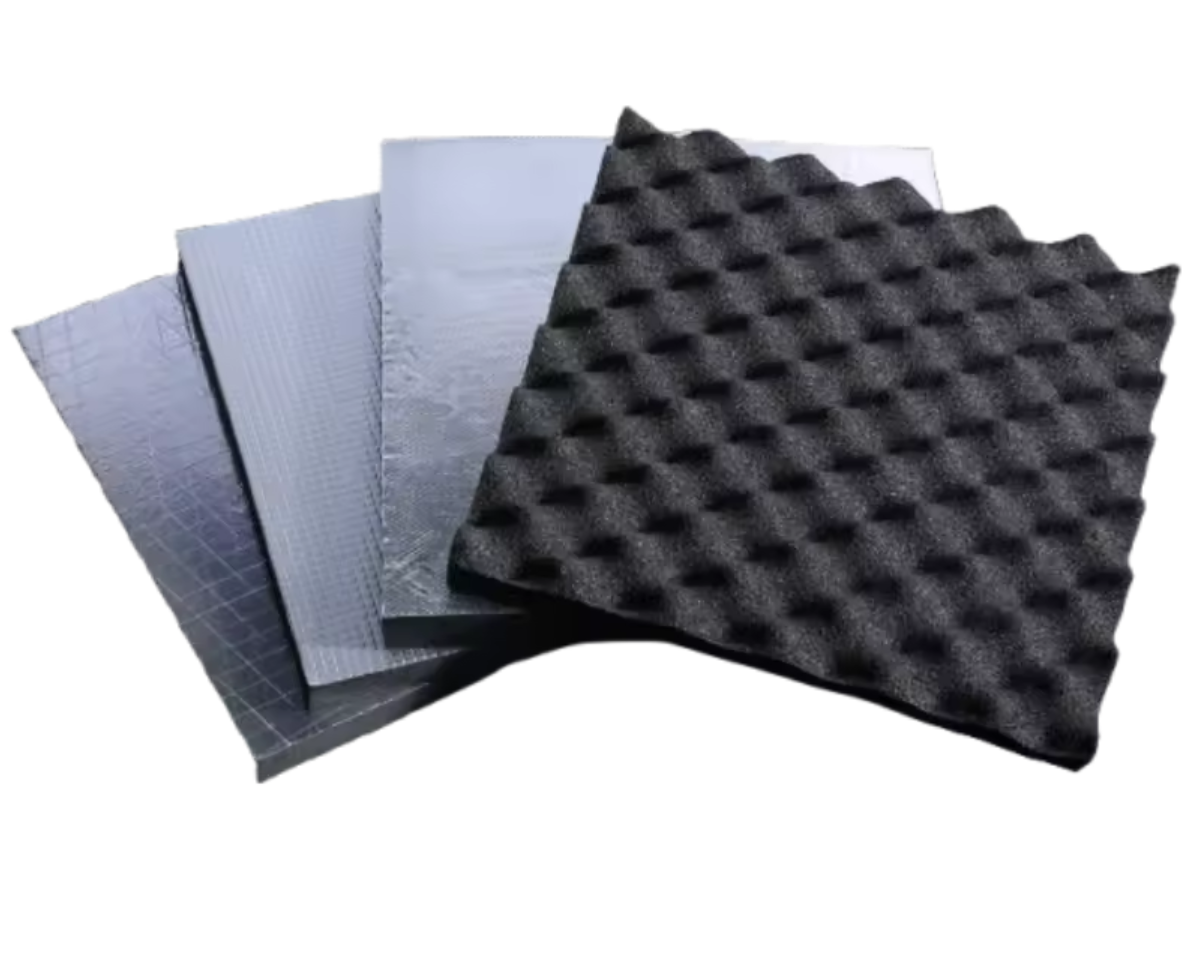
Not all synthetic rubber serves the same purpose. Manufacturers engineer different internal structures and physical formats to solve specific commercial challenges.
The microscopic cell structure determines how the material behaves around moisture and sound.
Closed-Cell: Millions of tiny, sealed nitrogen bubbles make up this structure. It is highly impermeable to moisture, boasting a microscopic 0.2% water absorption rate. This makes it the absolute industry standard for thermal and condensation control.
Open-Cell: The cells remain interconnected. It functions much like a structural "sponge" and can absorb up to 4% water. You must reserve this strictly for dry, interior applications. It excels uniquely at acoustic dampening, offering a much higher Noise Reduction Coefficient (NRC).
HVAC layouts require flexible form factors to cover complex geometry.
Rolls and Wraps: These flexible sheets come in varying thicknesses. Installers use them for the external wrapping of round, oval, or flexible ductwork. They bend easily around tight corners and elbows.
Rubber Foam Insulation Board: These are rigid or semi-rigid panels. Installers apply a rubber foam insulation board to large, rectangular sheet metal ducts. They provide uniform, unbroken thermal resistance across wide flat surfaces.
Procurement teams constantly weigh synthetic rubber against traditional fiberglass. Both materials insulate, but their physical properties dictate completely different operational outcomes.
Thermal conductivity dictates how well a material blocks heat transfer. We measure this using K-values. Lower K-values represent better insulating power.
Standard fiberglass often yields a slightly better K-value. It typically ranges from 0.23 to 0.24. Meanwhile, standard rubber insulation ranges from 0.245 to 0.28. While rubber remains highly effective, fiberglass holds a slight technical edge in pure thermal retention per inch.
Commercial ducts push air at intense speeds. We measure this velocity in Feet Per Minute (FPM). High-velocity air can tear internal liners apart.
Rubber typically withstands up to 4,000 FPM air velocity safely. Premium fiberglass liners can handle higher extremes, up to 6,000 FPM. However, rubber offers one crucial, non-negotiable advantage. It will never shed fibers into the airstream. This zero-shedding metric remains a critical evaluation standard for healthcare facilities, laboratories, and cleanrooms.
Financial realities often dictate material selection. Rubber procurement costs are historically five to six times higher than basic fiberglass rolls. This premium reflects the complex manufacturing process.
Packaging density also impacts scalability. Manufacturers compress fiberglass tightly for shipping. This reduces freight costs and warehouse space. Rubber cannot be compressed safely without destroying its cell structure. It requires significantly more transport space, driving up logistics expenses.
Evaluation Metric | Duct Insulation Rubber | Standard Fiberglass |
|---|---|---|
K-Value (Thermal) | 0.245 – 0.28 | 0.23 – 0.24 |
Max Air Velocity | Up to 4,000 FPM | Up to 6,000 FPM |
Fiber Shedding Risk | Zero | Low to Moderate |
Moisture Resistance | Superior (Closed-Cell) | Requires Foil Facing |
Compressibility | None (Requires large storage) | High (Cost-effective shipping) |
Commercial building codes strictly regulate what goes inside a drop ceiling. Materials must pass rigorous safety and air quality tests before approval.
Synthetic materials pose inherent flammability risks. Raw rubber is naturally combustible. Manufacturers must infuse it with heavy chemical flame retardants to meet standard building codes.
Transparency is necessary here. If untreated or improperly formulated rubber catches fire, it poses a severe risk of toxic off-gassing. It can release dangerous compounds like hydrogen cyanide. This reinforces the critical need for strict UL and NFPA compliance checking. Always verify your materials hold Class A fire ratings.
Maintaining excellent Indoor Air Quality (IAQ) protects occupant health. Industry organizations rely on strict ASTM mold testing standards to verify material safety.
Rubber inherently resists fungal growth. It lacks any organic food sources for spores to consume. Combined with its low moisture permeability, it starves mold completely. Modern rubber formulations also feature zero-formaldehyde compositions. This provides a cleaner air environment compared to a legacy insulation foam board or older fiberglass binders.
Choosing the right material only solves half the problem. Executing the installation flawlessly determines the actual performance. Rubber demands a highly specific skill set.
Rubber installation is highly manual. Technicians cannot use automated pin-spotting machinery commonly utilized for fiberglass. They must manually cut sections and apply specific, high-strength contact adhesives.
This reality directly impacts project schedules. Installation often takes double the time of fiberglass rollouts. Technicians must wait for adhesives to reach the perfect tackiness before pressing seams together.
The installation environment must remain controlled. Adhesives rely on specific chemical curing processes. These processes are highly sensitive to extreme site temperatures.
Applying adhesives in freezing conditions or excessive humidity ruins the bond. Improper application inevitably leads to seam failure. Failed seams allow air leaks, completely negating the moisture barrier.
Rubber is incredibly dense. Moving it requires serious logistical planning. Contractors must navigate heavy cartons through tight commercial drop-ceilings and narrow service corridors.
Best Practice: Always clean the duct surface with a fast-drying solvent before applying adhesive to ensure a permanent bond.
Best Practice: Cut materials slightly oversized to allow for natural compression at the seams without stretching.
Common Mistake: Stretching the rubber to reach a joint. It will eventually shrink back, tearing the seam open.
Common Mistake: Ignoring ambient temperature guidelines during application, resulting in widespread adhesive failure.
Given the specific strengths and logistical hurdles, when is rubber the absolute best choice? Use this framework to justify the premium investment.
Rubber remains the definitive choice for humid coastal or tropical environments. In these zones, the constant risk of duct condensation completely overrides initial material costs. Fiberglass easily fails here if the vapor jacket tears. Closed-cell rubber provides peace of mind.
Certain facilities mandate 100% fiber-free air delivery. Hospitals, pharmaceutical laboratories, and food processing plants cannot risk microscopic glass fibers entering the space. Rubber guarantees a clean, particulate-free airflow.
Modern commercial designs often feature open ceilings. Exposed ductwork requires a clean, professional aesthetic. Architects frequently specify rubber for its sleek, matte-black finish. It looks vastly superior to crinkled, foil-faced fiberglass wraps.
If your project aligns with these scenarios, take immediate action. Begin by auditing your existing ductwork for moisture damage. Calculate the precise R-values necessary for your specific climate zone. Finally, consult an HVAC insulation engineer to verify structural load capacities and project feasibility before placing material orders.
Protecting your HVAC system requires matching the right material to the right environmental threat. While alternative materials exist, synthetic rubber occupies a vital, premium tier in commercial construction.
Rubber demands a higher upfront capital investment and specialized labor, making it a deliberate architectural choice rather than a default option.
Its unparalleled moisture-blocking capabilities make it indispensable for high-humidity climates where condensation ruins buildings.
The zero-fiber shedding property ensures strict compliance in high-purity commercial applications like hospitals and labs.
Proper installation relies heavily on managing adhesive curing times and avoiding extreme temperature fluctuations during application.
Assess your facility's specific climate risks today. Review your local fire codes to ensure strict UL compliance. Contact a specialized distributor to quote tailored rubber solutions against standard foam boards for your upcoming ventilation project.
A: The R-value averages around R-4 per inch of thickness. It provides solid thermal resistance for most standard commercial HVAC applications. However, you must scale the thickness accordingly if you are building in extreme hot or cold climates to meet modern energy codes.
A: Yes, but with strict caveats. Raw rubber suffers from severe UV degradation when exposed to direct sunlight. You must wrap it in protective metal cladding or apply specialized UV-resistant liquid coatings to ensure it survives outdoor rooftop environments.
A: Raw synthetic rubber is naturally flammable. However, commercial HVAC rubber insulation is heavily treated with chemical fire retardants. This ensures it passes rigorous ASTM and UL fire safety standards, making it safe for indoor commercial drop-ceiling applications.
A: High-quality rubber insulation boasts an exceptional lifespan. It often outlasts the metal ductwork itself. This longevity assumes technicians installed it correctly, and facility managers keep it fully protected from continuous UV rays, physical puncturing, and harsh chemical exposure.


