

close
Choose Your Site
Global
Social Media
Views: 0 Author: Site Editor Publish Time: 2026-09-08 Origin: Site


Operating mechanical systems below ambient temperatures introduces a relentless physical challenge: moisture drive. When chilled water pipes and refrigeration lines meet warm, humid air, the resulting condensation compromises system efficiency and structural integrity. Failing to properly insulate sub-ambient systems leads to thermal energy loss, catastrophic Corrosion Under Insulation (CUI), mold proliferation, and premature equipment failure. Traditional open-cell or fibrous insulations require fragile, external vapor barriers that easily puncture during routine maintenance. To mitigate these risks, mechanical engineers and facility managers specify materials with inherent moisture resistance. We rely on specific elastomeric solutions to stop vapor drive at the source rather than depending on thin outer jackets. This article examines the technical mechanisms, comparative advantages, and implementation realities of using Closed Cell Rubber Foam Insulation to protect chilled systems.
Inherent Vapor Retardation: The continuous, impermeable cellular structure of closed cell rubber foam eliminates the need for a separate, easily damaged external vapor jacket.
Condensation Control: By maintaining surface temperatures above the ambient dew point, it serves as highly effective pipe condensation insulation, preventing dripping and subsequent water damage.
Installation Flexibility: The elastomeric nature of rubber insulation materials allows for seamless application over complex pipe geometries, valves, and fittings, reducing thermal bridging.
Long-Term Thermal Stability: Unlike fibrous materials that lose insulating value when wet, closed cell structures maintain a stable thermal conductivity (k-value) throughout their lifecycle.
Environmental and IAQ Compliance: Modern elastomeric foams contribute to LEED credits and meet stringent indoor air quality standards through low-VOC emissions and antimicrobial properties.
Mechanical systems operating below ambient temperatures face constant thermodynamic stress. Chilled water supply lines typically run at 42°F. Commercial refrigeration lines operate even colder, often dropping below freezing. Surrounding these pipes is ambient air carrying water vapor. Warm air holds significantly more moisture than cold air. When this warm, humid air contacts a cold pipe surface, it cools rapidly. The air loses its capacity to hold moisture and reaches its dew point. At this exact temperature threshold, invisible water vapor transforms into liquid condensate.
This process creates a powerful physical force known as vapor drive. Vapor pressure naturally moves from areas of high concentration to areas of low concentration. It also moves from warm zones to cold zones. In a chilled water system, the cold pipe acts as a magnet for water vapor. The vapor drive continuously pushes moisture toward the pipe surface. If the insulation surrounding the pipe is permeable, water vapor will penetrate it. You must stop this vapor drive to protect the system. This is why specifying proper pipe condensation insulation is a fundamental engineering requirement.
Ambient Temperature | Relative Humidity | Dew Point Temperature | Condensation Risk on 42°F Pipe |
|---|---|---|---|
85°F | 50% | 64.4°F | High |
85°F | 70% | 73.8°F | Severe |
90°F | 80% | 83.2°F | Extreme |
Moisture infiltration is the primary enemy of any chilled mechanical system. When water breaches the insulation system, it initiates a cascade of destructive events. The most severe consequence is Corrosion Under Insulation (CUI). CUI occurs when moisture becomes trapped between the insulation and a metallic pipe. The trapped water, combined with oxygen and fluctuating temperatures, accelerates oxidation. Carbon steel pipes pit and rust rapidly under these conditions. This corrosion remains hidden beneath the outer insulation jacket. Facility teams often do not notice the damage until a catastrophic pipe failure floods the building.
Thermal degradation presents another major risk. Insulation works by trapping tiny pockets of air or gas. Air is a poor conductor of heat, with a thermal conductivity of roughly 0.026 W/(m·K). Water, however, conducts heat at 0.598 W/(m·K). Water conducts heat twenty-three times faster than trapped air. When water vapor penetrates open-cell or fibrous insulation, it condenses and fills the air voids. The material becomes waterlogged. It loses its thermal resistance entirely. The central plant must then work harder to maintain chilled temperatures, wasting massive amounts of energy.
Biological hazards also emerge from wet insulation. Dark, damp, and warm mechanical rooms provide the perfect breeding ground for mold and mildew. Fibrous insulation materials trap organic dust, which feeds fungal growth when wet. Mold spores degrade indoor air quality. They spread through the building via return air plenums and HVAC systems. Remediating moldy insulation requires hazardous material protocols and extensive system downtime.
The manufacturing process of elastomeric foam dictates its unique physical properties. Manufacturers blend synthetic rubber compounds, typically a Nitrile Butadiene Rubber and Polyvinyl Chloride (NBR/PVC) mix, with chemical blowing agents. During extrusion and vulcanization, these agents expand. They create millions of microscopic, independent cells. Unlike kitchen sponges, these cells do not connect to one another. They encapsulate nitrogen gas within impermeable rubber walls.
This isolated cellular structure acts as a continuous, built-in vapor retarder. Water vapor cannot navigate through the solid rubber walls separating the cells. Therefore, closed cell rubber foam boasts an exceptionally low water vapor permeability rating. It does not rely on a fragile outer jacket to stop moisture. Even if a maintenance worker scratches the surface with a wrench, the underlying cells continue to block vapor transmission. The material defends itself against vapor drive at every layer.
Thermal conductivity, or k-value, measures how easily heat passes through a material. A lower k-value indicates better insulating performance. Elastomeric foam provides excellent baseline thermal resistance, typically ranging from 0.25 to 0.28 BTU-in/hr-sqft-°F. The trapped nitrogen gas within the cells blocks heat transfer effectively. More importantly, this k-value remains stable over the lifespan of the installation.
Fibrous materials suffer severe k-value degradation when exposed to humidity. A mere one percent increase in moisture content can destroy the insulating value of fiberglass. Because elastomeric foam rejects moisture, its thermal resistance does not degrade. Engineers can rely on the initial k-value calculations to hold true decades after installation. This stability ensures the chiller plant operates at peak efficiency without unexpected energy spikes.
Chillers, pumps, and compressors generate significant mechanical vibration. Rigid insulation materials transfer this vibration directly to the building structure. This creates structural noise that disturbs building occupants. The elastomeric nature of rubber foam provides inherent acoustic dampening.
The flexible, rubberized matrix absorbs mechanical vibrations. Installers use it in conjunction with isolation hangers and unistrut clamps to isolate the pipe from the structural supports. This prevents harmonic resonance from traveling down the piping network. Facility managers frequently specify elastomeric foam in noise-sensitive environments like hospitals, recording studios, and commercial office spaces. It solves a thermal problem and an acoustic problem simultaneously.
Condensation control naturally prevents mold by eliminating standing water. However, manufacturers take an extra step to protect indoor air quality. Many elastomeric foams feature EPA-registered antimicrobial additives. These chemical agents are integrated directly into the rubber mixture during manufacturing. They do not wash off or wear away over time.
These additives actively resist the growth of mold, mildew, and bacteria on the insulation surface. If dust settles on the pipe and ambient humidity spikes, the antimicrobial agents prevent spores from colonizing. This proactive defense mechanism is mandatory for maintaining clean air plenums and complying with strict health codes in healthcare facilities.
Fiberglass remains a common choice for domestic hot water systems. However, it presents severe liabilities on chilled systems. Fiberglass is naturally porous. It offers zero resistance to water vapor. To function on a cold pipe, fiberglass relies entirely on an All-Service Jacket (ASJ). The ASJ is a thin outer wrapper made of paper, foil, and scrim.
In high-humidity environments, ASJ jackets fail at an alarming rate. Maintenance workers puncture them with tools. Ladders dent them. The mastic and tape sealing the longitudinal seams degrade over time. Once the ASJ breaches, vapor drive forces moisture into the fiberglass. The material becomes a wet sponge. Elastomeric foam eliminates this failure point. Its moisture resistance is built into every millimeter of the material, not just the outer skin.
Cellular glass is another closed-cell material used on chilled systems. It consists of millions of sealed glass cells. Cellular glass offers superior compressive strength. It is completely impermeable to moisture and non-combustible. However, it carries significant installation drawbacks.
Cellular glass is extremely rigid and brittle. It requires specialized tools to cut. Fabricating fittings generates abrasive glass dust. Installers must apply a bore coating to the inside of the glass to prevent it from abrading the copper pipe. They must also seal every joint with specialized sealant and cover the entire system in metal jacketing. The installation process is slow, messy, and highly labor-intensive. Flexible elastomeric foam cuts easily with a sharp knife. It bends around complex pipe geometries without snapping. While cellular glass excels in direct-burial applications, rubber foam dominates indoor mechanical spaces due to its flexibility and speed of installation.
Polyisocyanurate (PIR) provides exceptional thermal resistance. It boasts a very high R-value per inch. Like cellular glass, PIR is rigid. It also requires a perfectly sealed external vapor barrier, typically a zero-perm Saran wrapper, to function on chilled systems. PIR is highly susceptible to moisture vapor if the outer jacket fails.
Installing PIR on complex fittings like valves, strainers, and P-traps requires precise fabrication. Any gap in the vapor barrier leads to localized condensation and ice formation. Rubber insulation materials provide a much more forgiving installation margin. The flexible foam stretches over irregular shapes. It adheres directly to itself, creating a seamless, vapor-tight envelope without relying on a separate jacket.
Material Type | Vapor Retarder | Flexibility | Moisture Resistance | Best Application |
|---|---|---|---|---|
Elastomeric Rubber Foam | Inherent (No jacket needed) | High | Excellent | Indoor chilled water, complex fittings |
Fiberglass with ASJ | External Jacket Only | Moderate | Poor (if jacket fails) | Hot water systems, dry environments |
Cellular Glass | Inherent | Rigid (None) | Excellent | Direct burial, high-compression zones |
Polyisocyanurate (PIR) | External Jacket Required | Rigid (None) | Moderate | Straight pipe runs requiring high R-value |
For standard piping networks, tubular elastomeric foam is the primary form factor. Manufacturers produce these tubes in specific internal diameters to match standard copper and steel pipe sizes. You can specify tubular insulation in two formats: unslit and pre-slit.
Unslit tubes offer the highest level of vapor security. Contractors slide these continuous six-foot tubes over new pipes before brazing or welding the connections. This method eliminates the longitudinal seam entirely. It provides a flawless thermal barrier. Pre-slit tubes feature a factory-cut seam down the length. Contractors use pre-slit tubes for retrofit applications on existing pipe networks. They snap the tube over the pipe and seal the seam with contact adhesive.
Properly insulating fittings requires skill. Contractors must use a miter box to cut the tubular foam to match the exact angles of elbows, T-joints, and P-traps. They must glue every cut edge to ensure zero thermal bridging. Leaving even a hairline gap exposes the cold pipe to ambient air, instantly generating condensation.
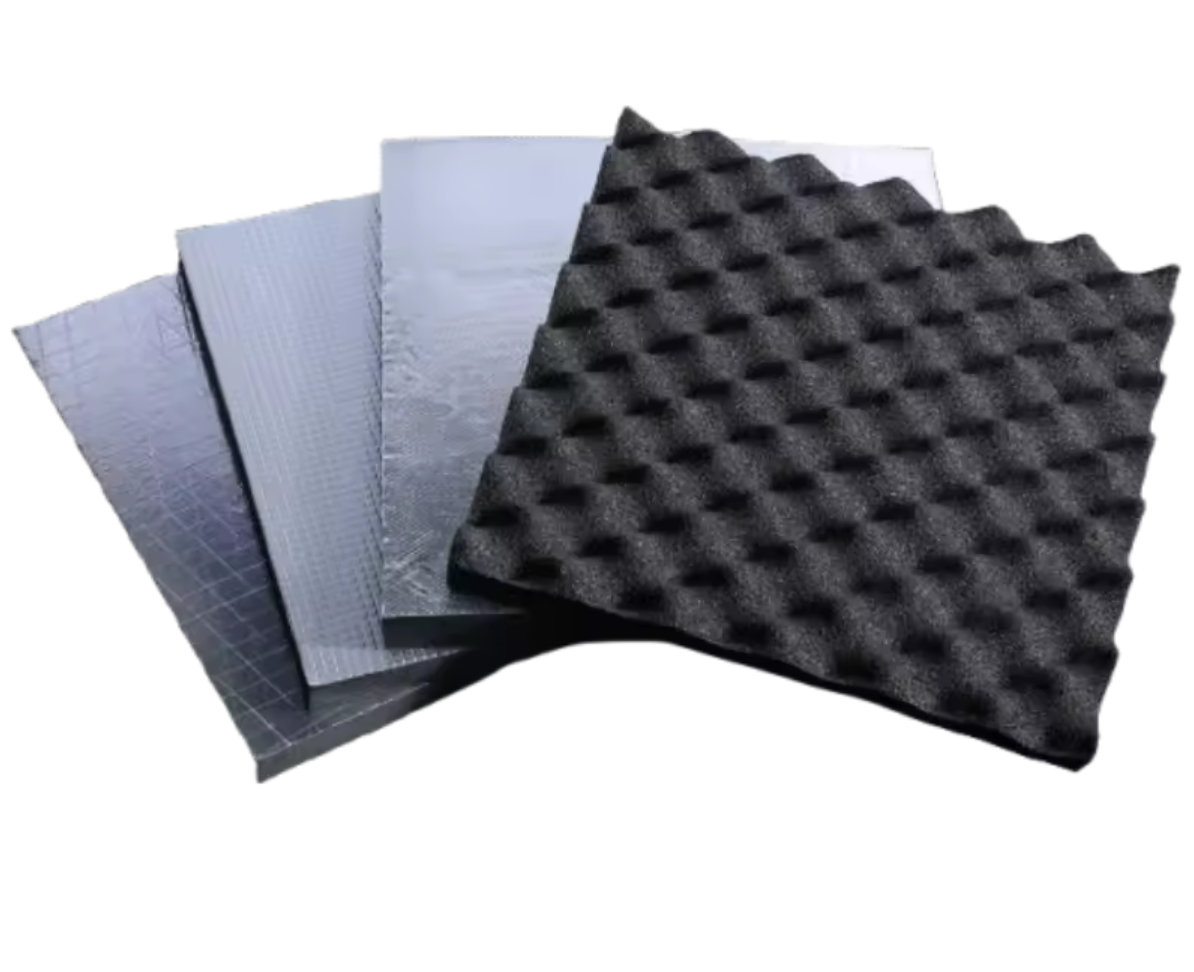
Tubular insulation becomes impractical for pipes exceeding eight inches in diameter. For large-diameter chilled water mains, chiller barrels, and storage tanks, contractors utilize rubber foam insulation board. Manufacturers supply this material in flat sheets or large continuous rolls.
Insulation boards wrap seamlessly around large cylindrical vessels. They also provide excellent condensation control for rectangular HVAC ductwork. When wrapping large pipes, contractors cut the board to the exact circumference of the pipe. They apply adhesive to the mating edges and compress them together to form a tight seal.
To reduce labor time, many boards feature a pressure-sensitive adhesive (PSA) backing. The contractor peels away the release liner and presses the foam directly onto the metal surface. PSA backings work exceptionally well on flat or gently curved surfaces. They eliminate the need to brush liquid adhesive over massive surface areas. However, the metal surface must be completely clean, dry, and free of oil for the PSA to bond permanently.
An elastomeric insulation system is only as strong as its seams. The inherent moisture resistance of the rubber means nothing if the joints remain open. Standard tapes and mechanical fasteners fail on chilled systems. They allow vapor to bypass the insulation.
Contractors must use manufacturer-approved liquid contact adhesives. These adhesives contain solvents that melt the rubber slightly. When pressed together, the edges fuse into a single, continuous piece of rubber. This chemical bond creates a vapor-tight seal. Applying contact adhesive requires strict adherence to the following steps:
Clean the pipe surface and the rubber foam edges to remove all dust, oil, and debris.
Stir the liquid contact adhesive thoroughly to ensure the solvents and solids are properly mixed.
Brush a thin, even layer of adhesive onto both mating surfaces of the rubber foam.
Wait for the adhesive to dry to the touch. It should feel tacky but not transfer to your finger when pressed.
Align the edges carefully and press them together firmly. The chemical reaction will instantly fuse the rubber.
Apply pressure along the entire seam using a wet compression technique, pushing the material together rather than stretching it.
Bare elastomeric foam performs flawlessly indoors. However, it possesses a known vulnerability: ultraviolet (UV) radiation. Prolonged exposure to direct sunlight breaks down the molecular bonds of the synthetic rubber. The surface becomes chalky, cracks, and eventually crumbles. Weather exposure also degrades the material.
You must protect outdoor installations, such as rooftop chiller lines. Manufacturers offer specialized UV-resistant coatings. Contractors paint these coatings over the bare foam in two thick layers. For maximum durability, engineers specify mechanical jacketing. Wrapping the foam in aluminum or PVC cladding shields it entirely from solar radiation, bird pecking, and severe weather. The jacketing acts as a physical shield, while the rubber foam handles the thermal and moisture control.
Building codes strictly regulate materials installed in return air plenums. The primary standard in North America is ASTM E84, which measures surface burning characteristics. Materials must achieve a flame spread index of 25 or less and a smoke developed index of 50 or less (the 25/50 rating).
Most premium elastomeric foams meet this 25/50 rating. However, thickness plays a major role. A specific brand of rubber foam might pass the test at a one-inch thickness but fail at a two-inch thickness because the added mass generates too much smoke. Engineers must verify that the specified material maintains its 25/50 rating at the exact thickness required for condensation control. If a thick layer is necessary, contractors may need to apply two separate layers of thinner, compliant foam.
Modern construction demands sustainable building materials. Legacy insulation products often utilized blowing agents containing chlorofluorocarbons (CFCs). Today, reputable manufacturers produce elastomeric foam with zero Ozone Depletion Potential (ODP) and zero Global Warming Potential (GWP).
Indoor air quality certifications also drive material selection. GREENGUARD Gold certification ensures the product emits minimal Volatile Organic Compounds (VOCs). Specifying low-VOC foam and accompanying low-VOC adhesives helps projects earn LEED credits. It also ensures a safe breathing environment for installers and future building occupants. Always request environmental product declarations (EPDs) during the submittal process.
Calculate required insulation thickness using local maximum ambient temperature and relative humidity data to ensure the surface remains above the dew point.
Specify unslit tubular foam for new piping installations to minimize longitudinal seams and reduce the risk of vapor leaks.
Apply manufacturer-approved liquid contact adhesive to all joints, seams, and termination points to create a continuous chemical bond.
Install aluminum or PVC mechanical jacketing over any elastomeric foam exposed to outdoor weather or direct ultraviolet radiation.
A: Most elastomeric rubber foams operate effectively between -297°F and +220°F. This broad range accommodates standard chilled water lines and commercial refrigeration. Extreme cryogenic applications below this threshold require specialized layering techniques to prevent the rubber from becoming brittle and cracking under thermal contraction.
A: For standard indoor chilled applications, no. The closed-cell structure inherently acts as a highly effective vapor retarder. However, in extreme high-humidity environments, direct wash-down areas, or severe cryogenic applications, engineers specify an additional vapor barrier jacket for redundant moisture protection.
A: You calculate thickness based on four primary variables: internal line temperature, maximum ambient air temperature, maximum relative humidity, and the outer diameter of the pipe. Engineers use standard psychrometric calculators to determine the exact thickness needed to keep the insulation surface temperature above the ambient dew point.
A: Yes, but you cannot leave it exposed. Ultraviolet radiation breaks down the rubber compound over time, causing it to chalk and crack. You must protect outdoor installations with a manufacturer-approved UV-resistant coating, aluminum jacketing, or PVC cladding to prevent solar degradation and weather damage.
A: Open-cell foam features interconnected pockets that absorb water and air, functioning much like a sponge. Closed-cell foam consists of isolated, independent gas-filled bubbles. This isolated structure blocks moisture vapor transmission entirely, making closed-cell materials mandatory for sub-ambient condensation control.
A: You must use specific liquid contact adhesives designed for elastomeric materials. Standard tapes will fail. The contact adhesive melts the rubber slightly, fusing the two edges together into a continuous, vapor-tight chemical bond. Apply it to both surfaces and allow it to tack before joining.
A: Yes. Modern elastomeric formulations are fiber-free, formaldehyde-free, and do not particulate into the air stream. Leading brands achieve GREENGUARD Gold certification for low VOC emissions, making them completely safe for occupied spaces, hospitals, and educational facilities with strict air quality standards.


