

close
Choose Your Site
Global
Social Media
Views: 0 Author: Site Editor Publish Time: 2026-09-09 Origin: Site


Managing radiant heat transfer and mitigating moisture migration dictate the success or failure of modern building envelope designs. These physical forces directly impact energy efficiency, structural longevity, and daily operational loads. Specifiers, architects, and contractors face a strict mandate: select insulation materials that block radiant heat while acting as reliable vapor retarders. Misapplying these materials causes severe structural damage. Misunderstanding thermal mechanisms leads to trapped moisture, failed building codes, compromised HVAC efficiency, and accelerated material degradation.
This guide evaluates the specific structural applications of foil-based barriers. We detail exactly where they succeed in the field. You will learn how they integrate with composite materials and traditional bulk insulation. We also cover the technical criteria required for specifying them in commercial, industrial, and residential building projects to ensure long-term performance and code compliance.
Radiant Heat Mitigation: Aluminum foil insulation film functions primarily by reflecting up to 97% of radiant heat, making it highly effective in roofing and attic assemblies when paired with an adequate, unventilated or ventilated airspace.
Moisture and Vapor Control: Beyond thermal properties, foil films act as Class 1 vapor retarders, essential for preventing interstitial condensation in wall cavities, cold storage facilities, and HVAC systems.
Composite Versatility: Standalone film is often laminated to other substrates—such as foil faced glass wool board or foil faced rubber foam board—to combine radiant reflection with conductive thermal resistance (R-value) and acoustic dampening.
Installation Dependency: The thermal efficacy of any foil-based insulation is entirely dependent on proper installation, specifically the maintenance of an adjacent dead air space, the mitigation of dust accumulation, and the prevention of galvanic corrosion.
Energy ROI and Compliance: When specified correctly, foil insulation significantly reduces cooling loads, aiding in International Energy Conservation Code (IECC) compliance and contributing to LEED certification points.
Defining a successful insulation strategy requires separating conductive heat resistance from radiant heat reflection. Traditional mass insulation slows down conductive heat transfer. It traps air within a matrix of fibers or foam cells. Radiant barriers operate on an entirely different physical principle. They block the transfer of infrared radiation across open spaces. Aluminum Foil Insulation Film handles this specific task. It addresses radiant heat through two primary surface properties: high reflectivity and low emissivity.
Reflectivity measures how much radiant energy a surface bounces back toward the source. Pure aluminum foil reflects up to 97% of striking infrared radiation. Emissivity measures how much heat a material radiates from itself. Aluminum has an exceptionally low emissivity rating, typically falling below 0.05. This means it emits only 5% of the heat it absorbs. A low-emittance surface is an absolute physical requirement in the building envelope to block infrared radiation effectively. Without a low-emissivity layer, solar heat easily radiates through roof decks and into conditioned spaces.
Heat Transfer Mode | Insulation Mechanism | Primary Material Solution |
|---|---|---|
Conduction | Traps air to slow heat flow through physical mass. | Fiberglass, Mineral Wool, Foam |
Radiation | Reflects infrared energy across an open air space. | Aluminum Foil Insulation Film |
Convection | Blocks air movement and drafts through the envelope. | Air Barriers, Spray Foam, Taped Foil |
Thermal control is only half the equation. Moisture management is equally critical to building envelope integrity. Foil films act as highly effective Class 1 vapor retarders. The perm rating of pure aluminum foil is typically less than 0.1 perms. This makes it practically impermeable to water vapor. This property is vital for preventing interstitial condensation within building assemblies. When warm, moisture-laden air hits a cold surface inside a wall cavity, condensation occurs. This leads to mold growth, wood rot, and degraded insulation performance.
Installing a foil vapor barrier on the warm side of the insulation prevents this moisture drive. In high-humidity climates, the placement of this vapor retarder requires careful calculation. Incorrect placement can trap moisture inside the structural cavity. Engineers must evaluate the drying potential of the wall assembly. They use ASHRAE guidelines to map the dew point across the wall profile. Foil films provide absolute moisture control when positioned correctly within this thermal gradient.
Standalone foil films do not provide significant conductive thermal resistance. They lack the physical mass required to slow conduction. Therefore, modern building designs utilize hybrid insulation systems. These systems pair aluminum foil with traditional mass insulation. Fiberglass batts, mineral wool, or spray foam handle conductive and convective heat transfer. The foil layer manages radiant heat and vapor drive. This combination creates a comprehensive thermal envelope.
Contractors frequently deploy a multi-layered approach in roof assemblies to maximize energy efficiency. The installation sequence typically follows strict guidelines to ensure all materials perform as engineered:
Install traditional fiberglass batts directly into the rafter cavities to establish baseline conductive resistance.
Attach furring strips across the bottom of the rafters to create a mandatory 3/4-inch minimum air gap.
Secure the foil radiant barrier to the furring strips, ensuring the low-emissivity surface faces the newly created air space.
Seal all overlapping seams with UL-listed aluminum tape to finalize the continuous vapor retarder.
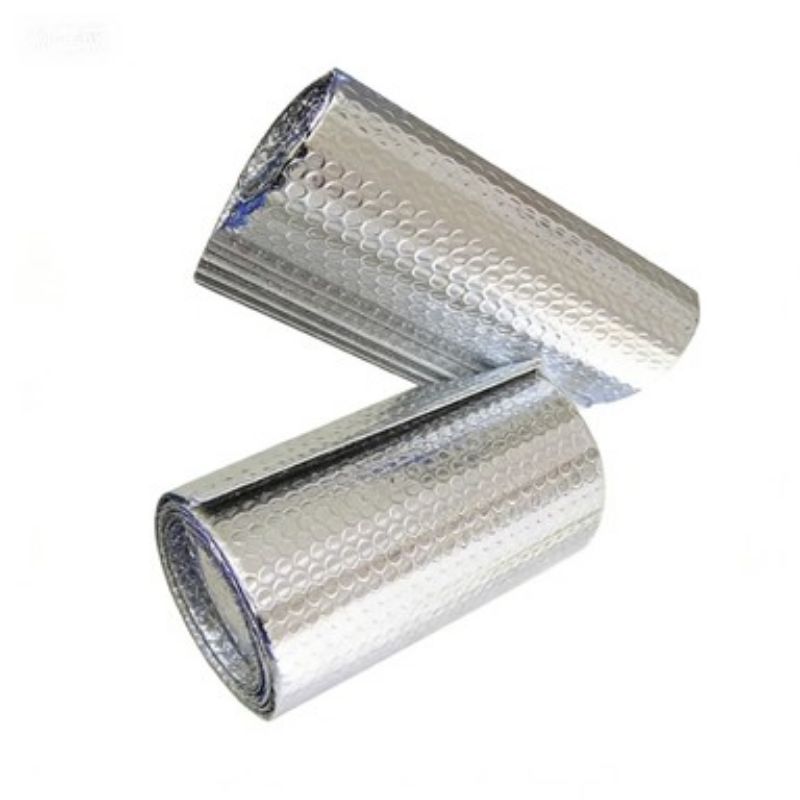
Roofing assemblies endure the highest solar heat gain of any building component. Foil insulation serves as a primary defense line in these areas. Contractors install it as a radiant barrier directly under the roof decking. This application significantly reduces solar heat gain during peak summer months. It lowers the attic temperature, which subsequently reduces the cooling load on the HVAC system below. The energy savings in hot climates are substantial.
Installation methods vary based on roof design and ventilation requirements. Draping the foil over the rafters before installing the roof deck provides a natural air gap. This method is highly effective but requires installation during initial construction. Alternatively, contractors can staple the foil to the bottom of the roof trusses in existing buildings. Both methods require careful attention to attic ventilation. Proper airflow must exist above or below the foil to carry away the reflected heat and prevent moisture accumulation.
Wall assemblies benefit from foil insulation in mixed and extreme climates. Builders integrate foil layers into both timber-frame and steel-frame wall cavities. In steel-frame construction, foil helps mitigate the severe thermal bridging caused by metal studs. The foil reflects heat away from the cavity while acting as a robust vapor barrier. This keeps the interior wall dry and thermally stable.
Foil can also function as a weather-resistant barrier (WRB) when applied over exterior sheathing. In this application, the foil faces an exterior air gap behind the cladding. Brick veneer or fiber cement siding typically provides this necessary airspace. The foil reflects radiant heat from the sun-heated cladding back outward. Simultaneously, it prevents exterior wind-driven rain and moisture from penetrating the structural sheathing. Proper taping of all seams is mandatory to maintain the WRB integrity.
Mechanical routing requires strict thermal and moisture control. HVAC ductwork and chilled water pipes operate at temperatures vastly different from the surrounding ambient air. This temperature differential drives thermal loss and creates severe condensation risks. Uninsulated ductwork wastes massive amounts of energy. Sweating pipes cause water damage and promote mold growth in ceiling plenums.
Rigid ductwork often utilizes foil faced glass wool board for exterior insulation. This composite material offers high thermal resistance to prevent energy loss. The glass wool core provides superior acoustic dampening, silencing air rush noises from the blowers. The exterior foil facing acts as the critical vapor barrier, preventing plenum moisture from condensing on the cold metal ducts.
For chilled water pipes and refrigeration lines, flexibility and moisture resistance are paramount. Contractors specify foil faced rubber foam board or tubular foam for these applications. The elastomeric rubber conforms tightly to complex pipe geometries. The closed-cell structure naturally resists moisture. The added foil facing provides a secondary, impenetrable vapor barrier. It also protects the rubber from physical damage and UV degradation in exposed mechanical rooms.
Radiant floor heating systems rely on directional heat flow. Heating tubes or electrical mats sit within the floor assembly. Without proper insulation, much of this heat radiates downward into the subfloor or foundation. Installing a foil radiant barrier beneath the heating elements solves this problem. The foil reflects the infrared energy upward into the living space. This maximizes the efficiency of the radiant heating system and accelerates warm-up times.
Unconditioned crawl spaces present another critical application. Ground moisture constantly evaporates into the crawl space air. Cold winter air also penetrates these areas, chilling the floor above. Installing foil insulation under the floor joists addresses both issues. The foil blocks ground moisture from migrating into the wooden floor assembly. It also reflects radiant heat from the living space back up into the home, keeping floors warm and reducing heating costs.
Temperature-controlled warehouses demand strict climate parameters. Massive roof spans and metal wall panels create enormous radiant heat loads. Foil insulation provides a lightweight, highly effective solution for these vast spaces. It reflects the solar load away from the building, drastically reducing the energy required to maintain interior temperatures. This is especially critical in cold storage facilities where cooling costs dominate operational budgets.
Agricultural metal buildings, such as poultry farms and dairy barns, face unique challenges. High animal density generates massive amounts of interior heat and moisture. Condensation on the interior of metal roofs can drip onto livestock, causing health issues. Foil insulation helps control this interior condensation. It keeps the interior roof surface warmer, preventing moisture from condensing. It also reflects summer heat away, preventing animal heat stress and improving overall agricultural yields.
Not all reflective surfaces perform equally in building envelopes. Specifiers must understand the technical distinctions between pure aluminum foil and metallized polyester, commonly known as Mylar. Pure aluminum foil is a solid metal sheet, typically laminated to a reinforcing scrim for tear resistance. It offers exceptional durability, natural oxidation resistance, and long-term reflectivity. It maintains its low emissivity over decades of service.
Metallized polyester consists of a plastic film coated with a microscopic layer of vaporized aluminum. While initially reflective, Mylar is susceptible to degradation. The thin metal layer can flake, oxidize, or delaminate when exposed to high heat or humidity. A cost-to-lifespan analysis heavily favors pure aluminum for commercial applications. Pure aluminum offers superior longevity and inherent fire resistance. Mylar may offer minor upfront cost savings but frequently fails long-term performance tests in harsh attic or industrial environments.
Space constraints often dictate insulation choices. When thick mass insulation will not fit, builders turn to reflective bubble foil insulation. This product encapsulates a layer of polyethylene air bubbles between two sheets of aluminum foil. It is widely used in metal buildings, pole barns, and masonry walls where space is at a premium. The trapped air bubbles provide a thermal break, adding a moderate conductive resistance (R-value) to the assembly.
The primary benefit remains radiant reflection. However, the bubble core prevents conductive heat transfer if the material touches another surface. Specifiers must evaluate the structural limitations of bubble foil. It performs poorly in high-compression areas. If the bubbles crush under the weight of a concrete slab or heavy roofing materials, the conductive R-value drops to zero. It must be installed in areas where it can maintain its physical loft.
Laminating foil to bulk insulation solves dual thermal challenges in a single installation step. Rigid and semi-rigid composites combine the R-value of mass insulation with the emissivity control of a radiant barrier. This integration streamlines construction schedules and reduces labor costs. The foil facing also adds dimensional stability to the underlying insulation board, making it easier to handle and cut on-site.
The choice of the core material depends on the specific application. Glass wool cores provide excellent fire resistance and acoustic absorption. They are ideal for interior walls and ductwork. Rubber foam cores offer flexibility and inherent moisture resistance. They excel in mechanical rooms and refrigeration applications. In both cases, the foil facing serves as the critical vapor retarder and radiant shield, elevating the performance of the base insulation material.
Material Type | Best Application | Key Advantage |
|---|---|---|
Pure Aluminum Foil | Attics, Roof Decks, Crawl Spaces | Maximum reflectivity (97%) and long-term durability. |
Reflective Bubble Foil | Metal Buildings, Pole Barns | Provides a thermal break and moderate R-value in tight spaces. |
Foil Faced Glass Wool | Rigid HVAC Ductwork, Interior Walls | Combines high thermal resistance with superior acoustic dampening. |
Foil Faced Rubber Foam | Chilled Water Pipes, Refrigeration Lines | Elastomeric flexibility with absolute moisture condensation prevention. |
Measuring foil insulation performance starts with emissivity and reflectivity. These are the most critical metrics for code compliance and thermal success. Standard benchmarks require a radiant barrier to have a minimum of 90% reflectivity. Furthermore, it must possess an emissivity rating of 0.1 or lower. These values are tested and verified under ASTM C1371 standards.
Specifiers must demand independent laboratory test reports confirming these ratings. A material might look shiny but possess a high emissivity due to clear protective coatings or plastic laminates. If the emissivity exceeds 0.1, the material will not function effectively as a radiant barrier. It will absorb and re-radiate heat, defeating its primary purpose in the building envelope.
Building codes strictly regulate the flammability of exposed insulation materials. Foil films must pass rigorous fire safety testing before installation in commercial or residential structures. The primary standard is ASTM E84, also known as UL 723. This test measures the surface burning characteristics of building materials. It evaluates two specific metrics: flame spread index and smoke developed index.
Most building codes require a flame spread index of less than 25 and a smoke developed index of less than 50 for exposed applications. Pure aluminum foil naturally resists ignition. However, the adhesives and reinforcing scrims used in manufacturing can be highly flammable. Manufacturers must use fire-retardant scrims (FSK) and specialized adhesives to meet Class A fire ratings. Specifiers must verify ASTM E84 compliance for the exact composite assembly being installed.
Moisture management requires precise calculation. Specifying a foil vapor barrier without evaluating the wall assembly's drying potential invites structural failure. Engineers calculate vapor drive in different climate zones using ASHRAE guidelines. They determine whether moisture will move from the interior outward in cold climates or from the exterior inward in hot, humid climates.
Foil films have a perm rating near zero. They stop moisture dead. This creates a severe risk if double vapor barriers are accidentally installed. Trapping moisture between two impermeable layers guarantees rot and mold. To mitigate this, manufacturers offer perforated foil films. These products reflect radiant heat but allow water vapor to pass through. Specifiers must choose solid foil for true vapor barrier applications and perforated foil when the wall assembly requires outward drying potential.
High-reflectivity films contribute significantly to modern green building standards. They directly impact a building's energy efficiency by reducing HVAC tonnage requirements. Lower cooling loads translate to smaller, more efficient mechanical equipment. This reduces both upfront capital costs and long-term operational energy expenditures. Calculating this return on investment is a standard part of the specification process.
Foil insulation also aids in achieving LEED v4 certification points. It contributes primarily to the Energy & Atmosphere category by optimizing energy performance. It can also contribute to the Indoor Environmental Quality category by preventing moisture intrusion and subsequent mold growth. Proper documentation of the material's thermal performance and recycled content is necessary to secure these certification points.
The most common reason radiant barriers fail in the field is the lack of an airspace. Aluminum foil insulation provides zero radiant benefit if it is in direct, continuous contact with another conductive solid material. Radiant heat transfer only occurs across an open space. If the foil touches the roof deck or the drywall, heat conducts directly through the metal via physical contact.
Technical specifications mandate a minimum airspace for optimal performance. This gap typically ranges from 3/4 inch to 1.5 inches. Furring strips or specialized stand-offs are often used to create and maintain this space. Without this dead air space, the foil merely acts as a highly conductive vapor barrier. Ensuring this gap remains clear of debris and bulk insulation during construction is a critical site management task.
Field conditions rarely match pristine laboratory environments. Dust accumulation is a severe threat to radiant barrier performance. When dust settles on an upward-facing foil surface, it covers the low-emissivity metal. The dust itself has a high emissivity. It absorbs radiant heat and conducts it directly into the foil, destroying the radiant reflection properties over time.
Mitigation strategies focus on installation orientation. Whenever possible, contractors should install foil with the reflective surface facing downward. Dust cannot settle on a downward-facing surface. In vertical wall applications, dust accumulation is minimal. If an upward-facing installation is unavoidable, maintenance protocols must be established. Exposed foil in industrial settings may require periodic compressed air cleaning to maintain its thermal efficacy.
Pure aluminum is highly reactive in certain chemical environments. Galvanic corrosion occurs rapidly when bare aluminum foil comes into direct contact with wet concrete, mortar, or highly alkaline masonry. The alkaline moisture eats through the aluminum, destroying both the vapor barrier and the radiant surface. This is a major risk in foundation and crawl space applications.
Specifying the correct material prevents this failure. When installing insulation against foundation walls or masonry, contractors must use polymer-coated or composite foils. These products feature a thin, clear protective coating that isolates the aluminum from the alkaline environment. Alternatively, using a closed-cell foam board with a foil facing on the interior side keeps the aluminum safely away from the corrosive concrete.
A vapor barrier is only as effective as its weakest seam. Unsealed joints allow moisture-laden air to bypass the foil, leading to localized condensation and thermal loss. Standard duct tape or masking tape will fail under the temperature extremes found in building envelopes. The adhesive will dry out, and the tape will peel away.
Installation requires specialized, UL-listed aluminum tapes. These tapes utilize aggressive acrylic adhesives designed to withstand high heat and humidity. Every seam, tear, and penetration must be meticulously sealed to maintain vapor barrier continuity. Field crews must follow a strict taping protocol:
Wipe down all foil surfaces with a clean, dry cloth to remove job site dust and debris.
Apply UL-listed acrylic adhesive aluminum tape directly over the overlapping joint.
Use a plastic squeegee to apply firm, even pressure along the entire length of the tape to activate the adhesive.
Inspect the sealed joint for any wrinkles or fish-mouth openings, applying secondary tape patches if necessary.
Audit local IECC building codes to determine the exact required placement of vapor retarders for your specific climate zone.
Consult an MEP engineer to calculate the precise airspace dimensions needed to maximize cooling load reductions in your roof assembly.
Request and verify independent ASTM E84 fire rating test reports from the manufacturer before approving any foil composite for exposed interior applications.
Specify polymer-coated foil variants when installation plans require direct contact with concrete or highly alkaline masonry surfaces.
A: Yes. Aluminum foil requires an adjacent airspace to function as a radiant barrier. Without an air gap, heat transfers directly through the foil via conduction, rendering its radiant reflective properties completely useless. A minimum gap of 3/4 inch is typically required for optimal thermal performance.
A: Standard foil film is a thin, flat sheet used solely for radiant reflection and vapor control. Reflective bubble foil encapsulates a layer of air bubbles between foil sheets. This bubble core provides a thermal break, adding a moderate conductive R-value to the radiant properties.
A: Yes, it can be used in exterior cavity walls or as continuous exterior insulation. The glass wool provides excellent conductive resistance and acoustic dampening, while the foil facing acts as a robust weather-resistant barrier and vapor retarder when all seams are properly taped.
A: The closed-cell rubber foam provides high thermal resistance, keeping the exterior surface temperature above the ambient dew point. The foil facing adds a Class 1 vapor barrier, completely blocking moisture-laden air from reaching the cold duct or pipe surface.
A: No. Standalone aluminum foil has virtually no mass and provides zero conductive thermal resistance (R-value). Its thermal benefit comes entirely from reflecting radiant heat across an airspace. It must be paired with mass insulation to stop conductive heat transfer.
A: Bare aluminum foil should never touch wet concrete or fresh mortar. The high alkalinity of masonry causes rapid galvanic corrosion, destroying the foil. You must use polymer-coated foil or ensure a physical separation layer exists between the bare metal and the concrete.


